
-
Start With the Workflow, Not the Database
-
What People Mean When They Search for 'GTM Clay'
-
What Is a Lead Database and When Should a B2B Sales Team Use It?
- What Clay Lead Generation Actually Looks Like
-
What a 4-Week Pilot Taught Me
-
Data Quality Is a Brand Issue, Not Just a Metric
-
What I Look For Before Signing a Contract
-
When Clay and a Lead Database Are Not a Good Fit
Start With the Workflow, Not the Database
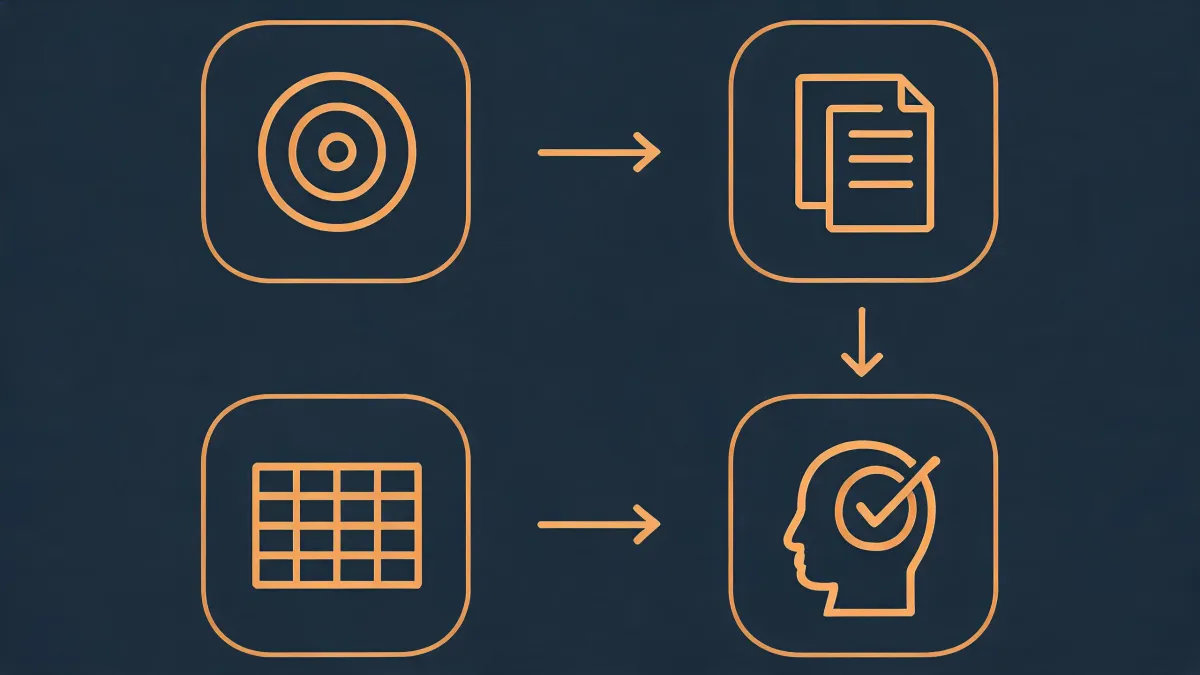
If your sales team is asking whether it needs a lead database, the honest answer is maybe. If you're looking at Clay specifically, stop thinking database and start thinking workflow. Clay lead generation works best when you attach it to a repeatable GTM motion, not when you hand your SDRs a giant list. In my experience, the teams that get value out of Clay are the ones that start with a process—like identifying website visitors, enriching them with contact data, and routing them to the right rep—and use Clay to make that process run.
I say this as the person who signs the contracts, not the person who sends the emails. I've evaluated enough sales data platforms to know that the tool is never the whole story. The workflow is.
What People Mean When They Search for 'GTM Clay'
Some people search for GTM Clay and expect to find a database like the legacy data providers. It's not that. Clay is closer to an automation layer for go-to-market teams. You can use it to research accounts, enrich contacts, build lists, and push them into your CRM or sending tool. The database part is just one ingredient.
Practically, Clay lead generation is less about owning a huge list and more about building a system that's always refreshing, deduplicating, and enriching your target accounts. That's a different mindset. Instead of paying for a fixed number of credits and hoping the data is current, you build a workflow that updates the same accounts on a schedule.
What Is a Lead Database and When Should a B2B Sales Team Use It?
A lead database is a structured collection of companies and contacts you can filter and export. Industry, company size, job title, location, email address, phone number—that kind of thing. Some data comes from public sources, some comes from partnerships, and some from automated methods. The accuracy depends on how often it's refreshed and how carefully it's verified.
You should start considering a lead database when your revenue depends on outbound volume and repeatability. If you're a B2B sales team that only needs a handful of conversations a month, simple research might be enough. But if you need 50 new conversations in a specific vertical, or you want to re-engage old accounts, you need a scalable way to build and refresh lists.
Here are the signs I look for when a team mentions lead gen:
- You can define your ideal customer profile, but you don't have enough accounts in each target segment.
- Your SDRs spend more time researching names than talking to people.
- You have ideal accounts in your CRM, but they're missing contacts or have stale titles.
- You want to act on signals like website visits, but you don't have a reliable way to turn an anonymous company into a named contact.
At the same time, a lead database won't help if you don't have a clear routing process. I learned that the hard way.
What Clay Lead Generation Actually Looks Like
Clay lead generation isn't about buying a CSV and uploading it. It's about creating a workflow that combines multiple sources. For example, you can start with your target account list, use Clay to enrich those accounts with the right people, then use intent data to prioritize the ones already researching your category.
When we set up Clay for our outbound team, the first workflow we built was simple. Take the list of accounts from Sales Navigator, enrich them with verified email addresses, remove roles that were too senior, and score each row based on fit. It sounds basic, but the difference was huge. Our SDRs went from spending around four hours a week on list-building to about thirty minutes.
The real win wasn't the database. The real win was that the workflow could run while people were sleeping, and every morning the next best contacts were already in the CRM.
Identify Website Visitors, Then Do Something With Them
The phrase identify website visitors gets thrown around a lot, and it's easy to overestimate what it means. A tool tells you that companies from your target list are visiting your pricing page. Interesting. But then what? Without a workflow, you're just watching a dashboard.
With Clay, you can take that visitor signal and turn it into action: enrich the company, find the person who matches your ICP, write a context-aware icebreaker about the page they viewed, and send the sequence. That's the difference between a data point and a lead.
What a 4-Week Pilot Taught Me
In our 2024 vendor consolidation project, we ran a four-week pilot with three tools. One was Clay, two were traditional lead databases. The SDRs were split into three pods, each using a different tool to build lists and run the same campaign. I was watching the usage dashboard, not just the replies.
The traditional databases were easy to use. Everyone understood them on day one. Clay took longer to learn. I'm not gonna pretend it was love at first sight. Some of our reps looked at the automation editor and said it felt like a spreadsheet with superpowers. That wasn't a compliment in their eyes.
But by week three, the dynamics shifted. The reps on Clay were tweaking their own workflow without asking for help. They were adding source columns, adjusting scoring rules, and flagging records that didn't match the ICP. The reps on the other tools were still exporting CSVs and cleaning them by hand. That was the moment I understood the difference.
The numbers didn't tell a dramatic story. Reply rates were close across all three pods. But time-to-first-touch dropped significantly for the Clay group because the list was ready before they sat down. That's the kind of operational win that doesn't show up in a demo.
Data Quality Is a Brand Issue, Not Just a Metric
The most frustrating part of evaluating lead databases is how similar every pitch sounds. Our data is the best. You'd think after the third demo you'd get a straight answer, but you don't. After a while, I started asking one question: Show me what happens when an email bounces.
That's where quality shows up. A database might have millions of records, but if even a small percentage of the emails are stale, your sending reputation drops, your replies drop, and your team loses confidence. Plus, every time a prospect gets a message addressed to someone who doesn't work there anymore, your company looks careless. I've been on the receiving end of cold emails like that. It doesn't feel high-end. It feels spammy.
This is why I don't recommend buying on price alone. Cheap data is cheap for a reason. The best investment is a source that has a real verification process and clear sourcing documentation. That doesn't mean you need the most expensive option. It means you need the one that protects your brand while your reps are out there.
What I Look For Before Signing a Contract
Since I'm the one who has to approve the invoice and explain it to finance, I care about a few specific things.
- Integrations: Can it sync cleanly with our CRM and sending tools?
- Sourcing: Where does the contact data come from? Can the vendor document it?
- Compliance: Does the platform support GDPR and CCPA requirements, including opt-outs and suppression lists?
- Adoption: Is there a real workflow owner on my team, or will this become shelfware?
Compliance is a big one for me. I'm not a lawyer, but I know that under GDPR you need a lawful basis to process contact data, and under CCPA you need to honor opt-outs and support access requests. If a vendor can't explain their sourcing, that's a red flag. Take it from someone who sits in the finance review meetings.
Adoption is the other deal-breaker. Trust me on this one: I've seen too many tools get a champion excited for a month and then collect dust. Clay has a learning curve. It rewards people who invest time in building and maintaining workflows. If your team isn't excited about that, a smaller out-of-the-box database might be a better fit.
When Clay and a Lead Database Are Not a Good Fit
I can only speak to my corner of the world: mid-market B2B SaaS with a dedicated SDR team. If you're a startup founder who wants to send a few hundred cold emails, Clay might be more tool than you need. If you're a massive enterprise with strict data residency requirements, you'll want a vendor that can satisfy legal review first.
Also, if you don't already have a defined go-to-market process, buying Clay won't create one. The platform doesn't make decisions for you. It executes the decisions you've built into the workflow. So before you commit, spend a week writing down exactly what you want it to do. If you're not gonna build the workflows, save the money.
Then again, if your goal is to identify website visitors, enrich contacts, and send timely outreach without a lot of manual work, the combination is powerful. Just go in with eyes open.