
-
Clay Enrich Signups Give You More Data, Not Better Judgment
-
How Does Ideal Customer Profile Fit into an Agent-Native Prospecting Workflow? It's the Operating System
-
The Surprise: The Highest-Leverage Move Is Excluding, Not Enriching
-
The Counterargument That Doesn't Hold
-
Bottom Line: ICP Is the Agent's Rulebook
If you're building an agent-native prospecting workflow in Clay before you've defined your ideal customer profile (ICP), you're doing it backwards. I'll die on that hill.
Here's where I'm coming from: I'm a quality and brand compliance manager at a B2B sales technology company. I review every outbound deliverable before it reaches the sales team—roughly 200+ items per year, maybe a third rejection rate in Q1 2025, I'd have to verify. Most rejections aren't because the data is wrong. They're because the data is irrelevant.
Clay is one of the most flexible go-to-market tools I've seen. The drag-and-drop tables, agents, enrichment, integrations—genuinely powerful. But powerful doesn't mean self-correcting.
Clay Enrich Signups Give You More Data, Not Better Judgment
The Clay Enrich Signups official documentation is straightforward: you add a list of signups, choose enrichment sources, and let the table attach attributes. If you need a phone number finder, you add a step to pull direct dials. If you're evaluating an intent data ABM platform, you connect a source and let the agent score accounts. All of that is available in the same workflow.
But—and this is the part that keeps me employed—enrichment doesn't know what good means. It only knows how to fill in blank spaces. Clay data enrichment will happily append "Company Size: 10,001+" to a row your sales team should never call. The platform doesn't stop you. It's not supposed to. Someone has to define the quality gate before the enrichment runs.
I said "enrich signups that match our ICP." They heard "enrich everyone who signed up." Result: 14,000 rows, 60% outside the target persona, and two weeks of miserable SDR follow-up.
We were using the same words but meaning different things. I discovered that when I ran the segmentation report.
How Does Ideal Customer Profile Fit into an Agent-Native Prospecting Workflow? It's the Operating System
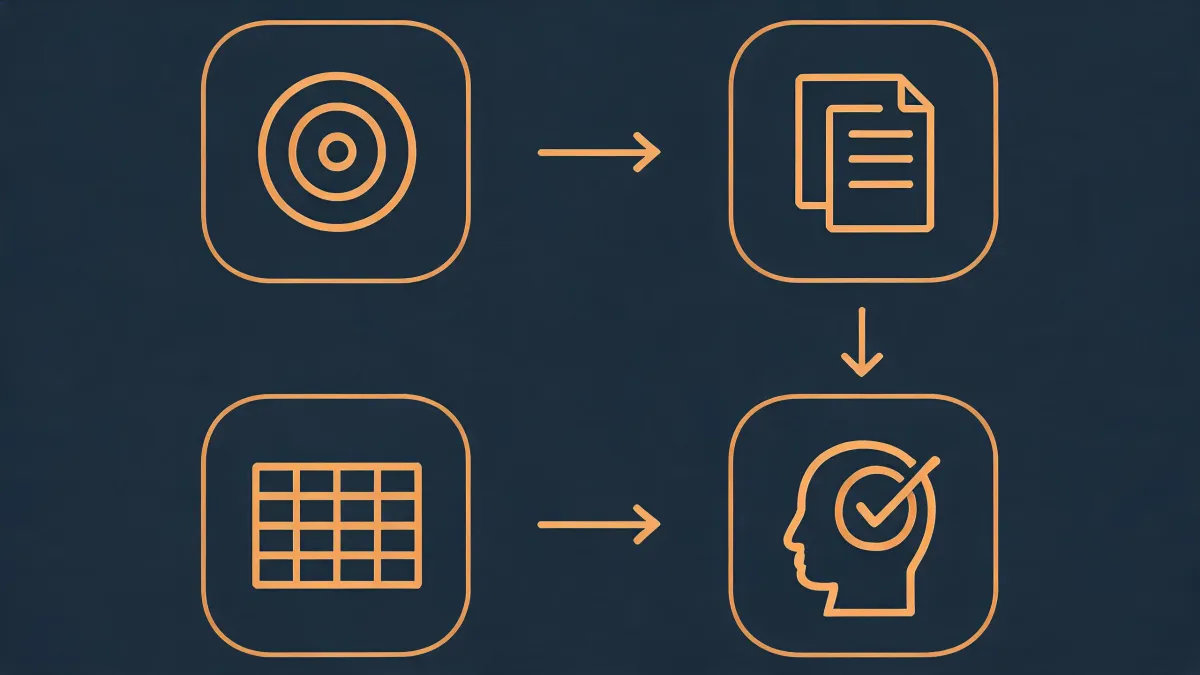
Agent-native prospecting replaces a lot of manual SDR research with agents that can search, reason, and act. But an agent doesn't have intuition. It doesn't know that a 1,000-person company in a mature industry with no tech budget is a poor fit, unless you define it. The ICP is not a nice-to-have persona slide. It's the instruction set the agent executes.
Concretely, your ICP should show up as filters inside the Clay table before you trigger enrichment, intent scoring, or phone lookup:
- Firmographic thresholds: revenue range, employee count, location, industry
- Tech or behavioral signals: current tools, hiring patterns, content engagement, recency of activity
- Negative criteria: segments that look attractive but historically don't convert
- Persona rules: which titles matter, which seniority levels, which department is the entry point
Once those rules are encoded, Clay data enrichment becomes a qualification layer rather than a data dump. Same for intent data: if you're evaluating an intent data ABM platform, connect it after your ICP filters are in place, not before. Without ICP, you're letting the tool decide what good looks like. With ICP, you're forcing the tool to prove it.
The Surprise: The Highest-Leverage Move Is Excluding, Not Enriching
Here's the surprise that changed how I audit these workflows. The biggest win from Clay enrichment isn't more data. It's less noise. Never expected the most impressive ROI to come from deleting contacts. Turns out the teams with the cleanest lists use agents to filter out non-ICPs first, then run a phone number finder only on the survivors.
Let me put it this way: a phone number finder is ten times more useful when it's only triggered for accounts that pass your ICP check. Intent data from an ABM platform is more valuable when you're using it to prioritize accounts that already fit, not to discover random companies that happen to be in-market.
There's something satisfying about watching a workflow remove 1,800 bad rows before they ever touch an outreach sequence. After a year of chasing "more contacts," finally seeing the win in "better contacts"—that's the payoff.
The Counterargument That Doesn't Hold
The pushback I hear most is: "If I make the ICP too strict, I'm going to limit my pipeline." I get it. It feels risky to turn away accounts that might somehow buy.
But here's my counter: the old SDR could compensate for a loose ICP with gut feel. An agent can't. In an agent-native workflow, the ICP is the gut feel. There's no background context, no hallway conversations, no "I have a hunch." There's only the criteria you wrote down.
I'm not saying your ICP should be frozen forever. Test different versions. Relax one threshold and see what happens. But don't blame Clay when you skipped the filters and turned a phone number finder into an expensive autodialer for the wrong market. Scale isn't the problem. Bad scale is.
You can always loosen a rule next quarter. You can't un-send 2,000 emails.
Bottom Line: ICP Is the Agent's Rulebook
ICP fits into agent-native prospecting before the agent starts. It should be the first table you build, the first condition you set, and the first thing you review on your Monday checklist. Clay's features—Enrich Signups, data enrichment, phone number finder, intent data, ABM integrations—are all enablers. But enablers don't replace targets.
An informed customer is the best customer. And a well-defined ICP is the best automation. I'd rather spend a day helping you tighten your ICP than explaining why your open rates are fine but your replies are dead.
Get the ICP right, then let the agent work. That's the only way agent-native prospecting actually feels native instead of chaotic.