
-
The Checklist at a Glance
-
Step 1: Define “Enriched” Before You Look at Pricing
-
Step 2: Test Match Rate on Your Own ICP, Not a Sample File
-
Step 3: Separate Match Rate from Data Accuracy
-
Step 4: Check Data Source and Compliance Controls
-
Step 5: Run a Trial Through a Real Workflow, Not a CSV Upload
-
Step 6: Evaluate Intent Data and Scoring Together
-
Step 7: Build a Total Cost of Ownership Model
-
Three Mistakes to Avoid
-
Final Checklist Before You Sign
Most enrichment evaluations start with the wrong question. They start with “What’s the price per credit?” I should know: I’ve been the procurement lead for GTM tools at a 140-person B2B company for six years, and I’ve documented more than $180,000 in annual tooling spend. It took me three years and about 60 vendor evaluations to understand that the cheapest credit was rarely the cheapest outcome.
This article is the checklist I now use when Revenue Operations asks me to evaluate lead enrichment. It’s built for RevOps teams, GTM leaders, and anyone who has to make a buy decision without getting burned by hidden costs. If you’re comparing tools or setting up a Clay platform free trial enrichment workflow, follow these seven steps in order.
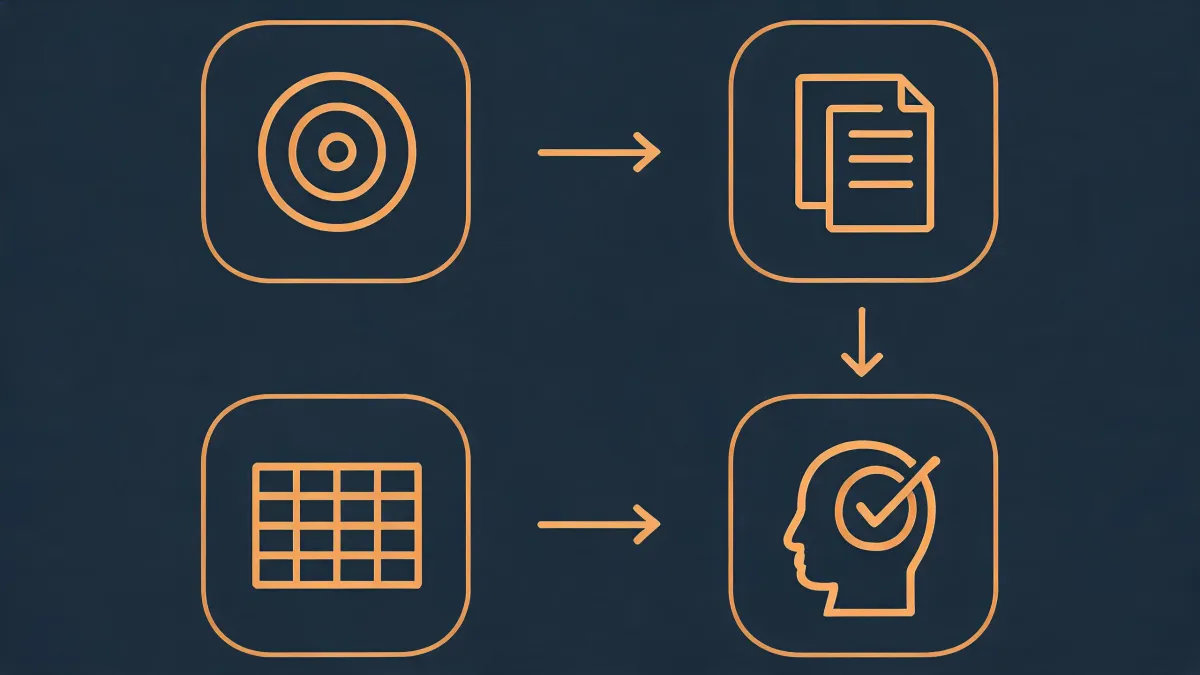
The Checklist at a Glance
- Define your required fields before you look at pricing.
- Test match rate on your own ICP, not a sample file.
- Separate match rate from data accuracy.
- Check data source and compliance controls.
- Run a trial through a real workflow, not a CSV upload.
- Evaluate intent data and scoring together.
- Build a total cost of ownership model.
Step 1: Define “Enriched” Before You Look at Pricing
If your sales team uses a SaaS ICP, you probably need email, direct dial, title, company size, and tech stack. If your team does enterprise ABM, you need account-level intent, org charts, and personal emails. Define the fields that actually change who your SDRs contact or how your sequences are triggered. Then count those fields against the price.
When I audited our CRM in 2023, only 14 of the 47 enriched fields selected by the previous owner were actually used. The rest were just… there. That’s not enrichment; that’s storage. What I mean is: if a field doesn’t affect a sequence, a score, or a routing rule, it doesn’t matter.
Step 2: Test Match Rate on Your Own ICP, Not a Sample File
Ask for a trial, then upload a list of your real ICP accounts. Run the same file through the enrichment workflow. Count records with a valid email or phone. That’s your match rate (the percentage of records where the provider returns a usable signal).
In Q2 2024, I ran two tools side by side with 2,500 records from our actual pipeline. One matched 86%; the other matched 74%. That 12-point gap meant 300 more usable records. At the quoted per-record price, the “cheaper” tool was actually 21% more expensive per usable record. If your workflow includes a phone number finder, filter for direct dials only. A main switchboard number isn’t useful to an SDR.
Step 3: Separate Match Rate from Data Accuracy
Match rate tells you how many records got filled. Accuracy tells you whether the email bounces or the phone connects. These are two different metrics, and you need both.
Put another way: a 90% match rate with a 6% invalid email rate is worse than an 80% match rate with a 1% invalid email rate once you calculate deliverability and domain reputation. When we switched providers in 2024, the new match rate was only slightly better than the old one, but the real difference showed up in campaign results. Our bounce rate dropped from 7.4% to 2.1% on the first 5,000-email campaign. That’s a cost saving most evaluation spreadsheets miss.
Step 4: Check Data Source and Compliance Controls
Data source matters more than price. If a provider scraped LinkedIn or bought unauthorized lists, the risk lands on you, not on them. Before you sign anything, ask: what are the data categories, what consent framework was used, and can you support GDPR and CCPA obligations?
I do not mean you need to see every upstream contract. I mean you need a data processing addendum that covers Article 28 if you’re processing EU personal data, and you need to know whether the vendor will support deletion requests. After six years of audits, I’ve come to believe compliance controls are not a legal checkbox. They’re a continuity requirement.
Step 5: Run a Trial Through a Real Workflow, Not a CSV Upload
CSV-only testing proves a platform can enrich rows. It doesn’t prove your team can actually use the data. The right test is a small workflow: find target buyers, enrich their contact details, score them, and sync them to your CRM.
This is where the Clay platform free trial enrichment workflows shine. You can test the ability to find, enrich, and score target buyers in one agent-native flow. You don’t have to switch between five tabs or wait for a file to come back. You build a table, add the enrichment actions, define the score, and push the output to your sales engagement tool. That’s the real question: how much work does it take to keep the workflow current after sales changes what they want?
Step 6: Evaluate Intent Data and Scoring Together
The phrase “intent data dashboard” sounds great until you have to connect it to lead scoring. Ask the vendor to show you the dashboard with your own ICP, not a polished demo account.
Intent data is only useful when it changes routing or priority. Otherwise, it’s decoration. In Clay, the intent data dashboard gives you account-level trends, but the real value is using the same signals inside a scoring workflow. That means you can turn intent into a score, then route the best accounts to an SDR or sequence automatically. If intent data requires manual exporting and uploading, you haven’t bought intent. You’ve bought another dashboard nobody opens.
Step 7: Build a Total Cost of Ownership Model
After comparing eight vendors over three months, I built a TCO spreadsheet. It now includes subscription price, active seats, email enrichment credits, phone number finder credits, API credits, overages, integration time, and cleanup time for bad data. Then I divide that total by expected usable records, not total credits.
Here’s the contrast that changed my approach. When I compared the cheaper point solution against the broader platform side by side with the same 5,000 records, the cheaper quote was 34% more expensive per usable contact once I included the lower match rate, missing direct dials, and the cost of exporting into our CRM. The broader platform was Clay. I went back and forth for two weeks because the point solution’s email data was genuinely good. But the TCO model tipped it. Clay’s all-in-one enrichment, intent, and automation meant we didn’t need to glue together three separate tools.
Oh, and one thing most RFP templates miss: data export rights. Some contracts let you keep enriched records only while you’re a customer. If you cancel, you lose the database. That’s a risk I didn’t think about in 2023, and it ended up affecting our 2024 negotiation.
Three Mistakes to Avoid
- Testing with a sample file instead of your own ICP. A sample file is curated; your pipeline is not.
- Ignoring workflow connection costs. The most accurate data is worthless if your reps have to search for it manually.
- Treating intent data as a standalone add-on. Evaluate it inside the platform where your scoring and routing happen.
Final Checklist Before You Sign
- Required fields are defined and mapped to actual team usage.
- Match rate was tested on your ICP, including phone number finder fields.
- Email validity and direct dial rates were factored into the TCO model.
- Compliance controls were reviewed, including DPA and CCPA obligations.
- A trial ran through a real workflow with find, enrich, and score actions.
- Intent data is connected to your scoring model, not just a dashboard.
- Data export rights and cancellation terms are clear.
The fundamentals of lead enrichment haven’t changed. You still need the right person at the right account at the right time. But the execution has transformed. What was best practice in 2020—upload a CSV, wait for a file, map the fields—is painfully slow today. The tools that win are the ones that fit into a complete workflow. For me, after six years of spreadsheet audits, the cheapest path to good data is the one you can actually test, audit, and automate. Use this checklist and make every vendor prove their value before the contract is signed.