
-
The problem I thought I was buying
-
What permissions does Okki Go require? The question behind the question
-
The deeper issue: API data enrichment is not a one-time import
-
Data enrichment AI RevOps: the handoff nobody documents
-
The cost of getting this wrong
-
How does waterfall enrichment fit into an agent-native prospecting workflow?
-
What I would ask before signing
The problem I thought I was buying
I am an office administrator for a 420-person B2B services company. I manage all software and services ordering—roughly $260,000 annually across 12 vendors. I report to both operations and finance.
When I took over software purchasing in 2023, I assumed the hard part was negotiating the license. The demo was smooth. Okki Go (okki-go) showed up in our evaluation with agent-native prospecting, waterfall enrichment plus intent, and human-in-the-loop outreach. The quote was not the lowest. My initial misjudgment was thinking the lowest quote would win because the data looked similar. Wrong. What broke was not price. It was permissions, data flow, and ownership.
What permissions does Okki Go require? The question behind the question
I started with a simple checklist: what permissions does Okki Go require? Mailbox send? CRM read and write? LinkedIn? Calendar? API tokens? That list matters. But the real question is who can see what, who can change what, and what happens when the agent writes back.
For outbound research and enrichment, the permission model usually touches:
- Mailbox access for sending, reply detection, and sequence suppression.
- CRM objects—accounts, contacts, leads, opportunities—often read and write if the agent updates records.
- Enrichment and intent API connections, including usage limits and data retention terms.
- LinkedIn or browser permissions if your workflow relies on social research or seat-based actions.
I am not 100% sure every Okki Go module requires all of these. It depends on which modules you turn on. My best guess is that the permission list is less important than the governance around it. If your RevOps team cannot answer who owns a bounced email record, permissions become a political problem, not an IT problem.
The deeper issue: API data enrichment is not a one-time import
Here is what I missed. API data enrichment sounds like a plumbing task. Connect the API. Map the fields. Done. It is not. Data decays. People change jobs. Companies change domains. Intent signals expire quickly. The agent-native prospecting workflow keeps making decisions from whatever data is available at that moment.
That is why waterfall enrichment matters. A waterfall enrichment approach tries multiple data sources in a sequence—one provider for firmographics, another for contact details, another for intent—until it finds a usable match. It sounds efficient. It is. But it also creates a new problem: which source gets credit for the match, and which source gets trusted when sources disagree?
I used to think enrichment was a procurement line item. Get the cheapest provider per verified contact. Then I watched our SDR team spend hours each week reconciling conflicting titles, dead emails, and accounts that had already been contacted. The cost was not the API call. The cost was the human cleanup.
Data enrichment AI RevOps: the handoff nobody documents
RevOps teams get asked to make data enrichment AI-ready and human-usable at the same time. That is a strange brief. The AI agent wants structured fields, confidence scores, and clear permissions. The human wants context: why is this account in the sequence? What did the prospect do last? Which message did they ignore?
Okki Go outbound research tries to bridge that gap. Instead of enriching every record with 40 columns, the workflow should enrich only what the agent needs to make the next decision. Company fit. Role relevance. Recent intent. Contactable channel. Then a human approves or edits the message. That is the human-in-the-loop part. It is not a replacement for a good SDR. It is a forcing function for better data hygiene.
When that handoff is not documented, finance sees a software invoice, sales sees another tool, and IT sees a permission risk. Nobody sees the real cost: slower sequences, duplicated outreach, and a CRM that no one trusts.
The cost of getting this wrong
I learned this the expensive way. In our 2024 vendor consolidation project, we had 12 tools and 4 overlapping data sources. The lowest-priced enrichment add-on looked like a $4,000 annual saving. Six months later, we were paying for manual verification, duplicate contact cleanup, and an extra contractor to fix CRM records. The savings disappeared. The hidden cost stayed.
There was also a compliance angle. GDPR (effective May 25, 2018) and CAN-SPAM (U.S. federal law, 2003) do not care which enrichment waterfall you use. They care about lawful basis, opt-outs, and data retention. If your API data enrichment process cannot respect suppression lists, you do not have an automation advantage. You have a liability with better UX.
And deliverability? No tool can guarantee 100% email accuracy or inbox placement. Anyone who promises that is selling you a future outage. What you can control is whether your workflow verifies before send, suppresses known bad addresses, and keeps a human in the loop for edge cases.
How does waterfall enrichment fit into an agent-native prospecting workflow?
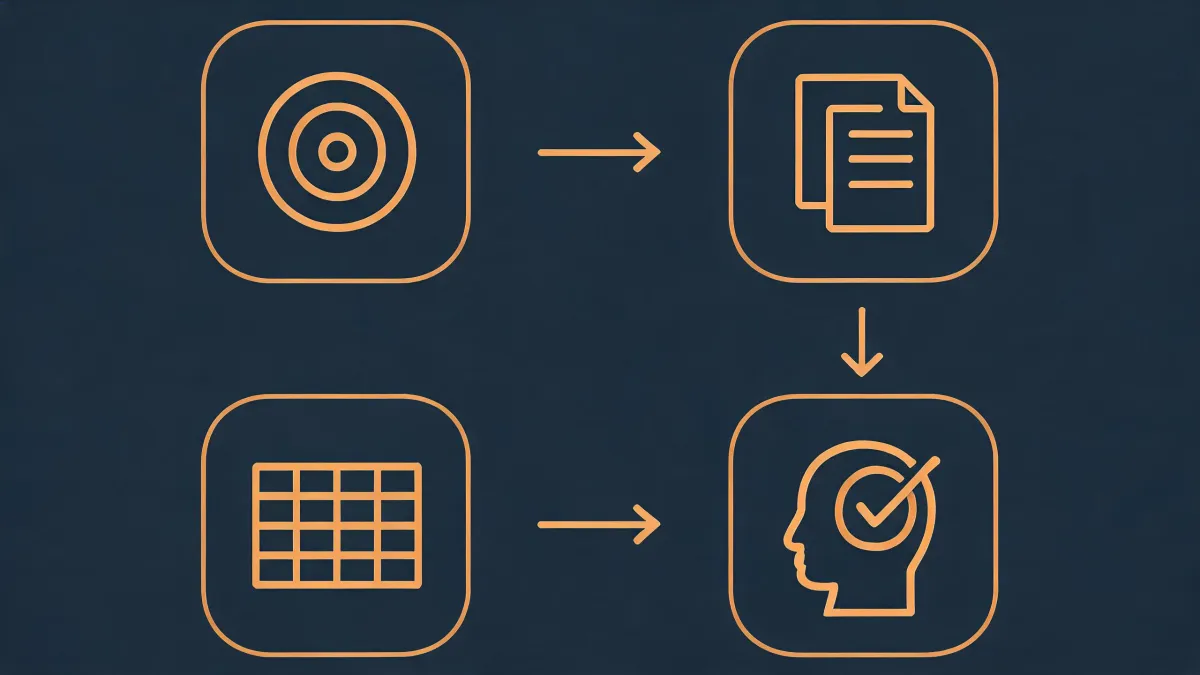
The cleanest way to think about it is as a decision chain, not a database build. An agent-native prospecting workflow starts with a target account or persona. The agent researches the account. It calls enrichment sources in a waterfall: first-party CRM, then a primary enrichment API, then a secondary source, then intent data. Each source adds a signal. The agent decides whether the account is worth a sequence. If yes, a human reviews the first touch. If no, the record is suppressed or parked.
That is where Okki Go permissions matter again. If the agent can read intent but cannot write suppression status back to the CRM, the workflow leaks. If it can send email but cannot read replies, it cannot stop. If it can enrich contacts but cannot see account ownership, it may step on an existing relationship. Permissions are not a one-time setup. They are the boundaries of the workflow.
My experience is based on about 12 software vendors and a mid-market company under 500 employees. If you are enterprise or heavily regulated, your permission and retention requirements will be stricter. I cannot speak to every industry. But the principle holds: value over price. The cheapest enrichment source is expensive if it creates rework.
What I would ask before signing
I would not start with the price per credit. I would start with four questions:
- What permissions does Okki Go require for each module, and can we scope them down by team?
- How does Okki Go outbound research handle conflicting enrichment data?
- Where does the agent write back, and who owns the record after that?
- How does the waterfall enrichment sequence respect suppression lists and retention rules?
Then I would run a two-week pilot with one SDR, one RevOps owner, and one finance reviewer. Not to prove ROI. To find the hidden cleanup work. If the workflow creates fewer manual fixes, it is probably worth the premium. If it creates more, the discount was a trap.
Simple. Not easy.
The lowest quote is not a strategy. It is a starting point.