
-
The Surface Problem: The Leads Look Fine Until the Sales Email Goes Out
-
The Deeper Cause: Lead Gen Is Being Used as an Input, Not a Stage
-
Why Email Verification Alone Doesn’t Save You
-
The Cost of Getting This Wrong
-
How Does Lead Generation Fit Into an Agent-Native Prospecting Workflow?
-
The Solution Is Boring: Gates, Not Miracles
The Surface Problem: The Leads Look Fine Until the Sales Email Goes Out
I’m a quality and brand compliance manager at a B2B sales tech company. I review outbound sequences, lead lists, enrichment notes, and campaign approvals before they reach prospects—roughly 200 campaigns a quarter. In 2025, I rejected 31% of first deliveries.
Not because the copy was bad. Because the data and the workflow behind it were shaky.
The surface problem usually sounds like this: “We need more leads.” Or “Our lead generation software isn’t producing.” Or “The SDR team says the list is stale.” So teams buy another database, another enrichment tool, another intent feed. Then the same thing happens.
A sales email goes out with the wrong title, a dead email address, or a signal that was true six months ago. Not ideal. But fixable—if you stop treating lead generation as a list-building step.
The Deeper Cause: Lead Gen Is Being Used as an Input, Not a Stage
Here’s the thing: most teams still think of lead generation as the thing that happens before prospecting. You build a list, verify it, write a sequence, send it. Linear. Batch. Done.
Agent-native prospecting doesn’t work that way. In an agent-native workflow, lead generation isn’t a one-time handoff. It’s a continuous loop that feeds the agent and learns from what happens after the sales email. The agent needs to know:
- Who matches the ICP today—not last quarter.
- What changed at the account in the last 14 days.
- Whether the contact is reachable, relevant, and allowed.
- Whether the signal is strong enough to justify a human review.
- What to suppress after a bounce, opt-out, or bad fit.
If lead generation software only gives you rows, the agent gets garbage in, garbage out. Faster garbage, usually. That’s the part people miss. Automation doesn’t fix a bad workflow. It scales it.
Why Email Verification Alone Doesn’t Save You
I’ve watched teams treat okki go email verification as a magic gate. Run the list, get green checks, send. But verification is a checkpoint, not a strategy. A valid email address can still belong to the wrong person. A catch-all domain can still burn your sender reputation. A verified contact can still be a terrible fit.
In our okki go workflow for SDR teams, verification sits between enrichment and outreach. It’s one gate. Before it, we need source quality, ICP rules, and exclusion logic. After it, we need intent context, human review, and feedback from replies.
That’s the expertise boundary I care about. A good platform should tell you when it doesn’t know something. If a tool claims every contact is sales-ready, that’s not confidence. That’s a compliance problem waiting to happen.
The Cost of Getting This Wrong
I knew I should rerun verification before a campaign launched because we’d enriched the list two weeks earlier. But we were rushing, and I thought, “What are the odds?” The odds caught up with me when 18% of the sends bounced. Not catastrophic, but embarrassing. Worse, it triggered a domain review that took three days to clear.
The upside of skipping that step was saving maybe two hours. The risk was torching a sending domain and wasting SDR time. I kept asking myself: is two hours worth potentially losing a quarter of our outbound capacity? No. It wasn’t.
That’s the real cost of bad lead generation inside a prospecting workflow. It’s not just wasted credits. It’s:
- SDR hours spent on contacts who were never going to reply.
- Domain reputation damage that takes weeks to repair.
- Brand damage when a sales email arrives with the wrong company name or a dead personalization token.
- Compliance risk when claims or opt-outs aren’t handled correctly.
Per FTC business guidance on advertising, claims must be truthful and not misleading and substantiated with evidence. That applies to what your SDRs write and what your lead generation software promises. If the workflow can’t support the claim, don’t make it.
Source: FTC Business Guidance on Advertising, ftc.gov/business-guidance/advertising-marketing
How Does Lead Generation Fit Into an Agent-Native Prospecting Workflow?
Once you see lead gen as a stage, not a list, the workflow gets simpler. Not easy—simpler.
Here’s the version I wish more SDR teams used:
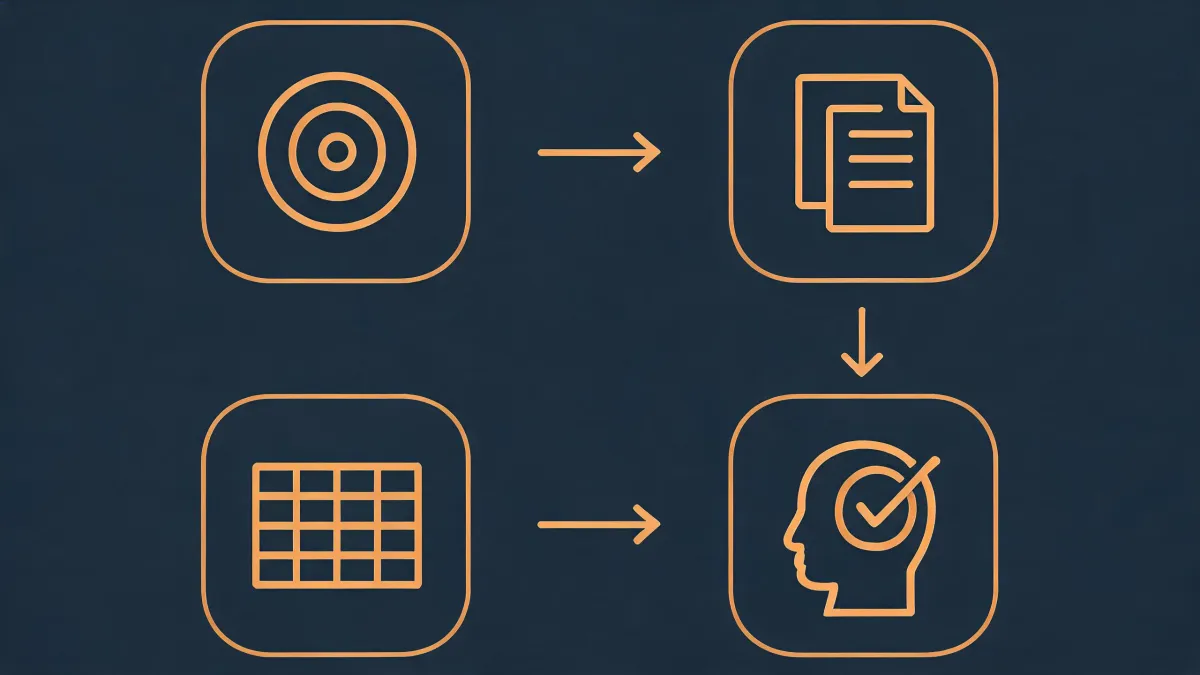
- Define the ICP and exclusions first. Industry, size, tech stack, geography, current customers, competitors, opt-outs. The agent needs boundaries before it needs volume.
- Source and enrich with a waterfall approach. One provider misses things. Waterfall enrichment plus intent data gives the agent more context, not just more fields.
- Verify at the right moment. Email verification should happen close to send time, after enrichment and before sequencing. Not a month earlier. Not as a one-time cleanup.
- Score for signal, not just fit. A perfect-fit account with no trigger is a maybe. A good-fit account with a hiring surge, funding event, or tech change is a conversation.
- Draft the sales email with context. The agent can assemble the first draft, but a human should review anything risky, vague, or too clever.
- Feed results back into suppression and scoring. Bounces, replies, meetings, and negative responses should update the workflow. Otherwise the agent keeps making the same mistake.
That last step is where most lead generation software stops. It exports a CSV and calls it done. But in an agent-native prospecting workflow, the export is the beginning of the feedback loop. At okkigo, the okki-go workflow is designed as that loop—not a list export.
The Solution Is Boring: Gates, Not Miracles
There’s something satisfying about a workflow that finally stops leaking. After all the panic fixes and last-minute list scrubs, seeing a campaign go out with clean data, verified contacts, and human-approved copy—that’s the payoff. It’s not flashy. It’s just quiet.
If you’re evaluating lead generation software, ask where it sits in the workflow. Can it enrich from multiple sources? Can it verify close to send time? Can it pass intent signals to an agent? Can it suppress bad contacts automatically? Can a human override it?
If the answer is “we just give you leads,” keep looking. A list is not a workflow. A sales email is not a strategy. And email verification is not a substitute for judgment.
Look, I’m not saying you need a perfect stack. I’m saying the best systems know their limits. They tell you when a contact is unverifiable, when a signal is weak, and when a human should step in. That’s not a weakness. That’s the whole point of an agent-native prospecting workflow.