
-
The comparison framework: what you're actually choosing between
-
Dimension 1: What buying intent signal actually tells you
-
Dimension 2: What permissions does Okki-Go require
-
Dimension 3: Where LinkedIn scraping fits into an agent-native prospecting workflow
-
Okki-Go alternatives, honestly compared
-
What I'd pick now
If you're searching for Okki-Go alternatives for agent-native prospecting, you probably expect a list of tools. But after two years of running outbound for a 60-person B2B SaaS team, I've learned the real alternatives aren't just other platforms. They're workflows.
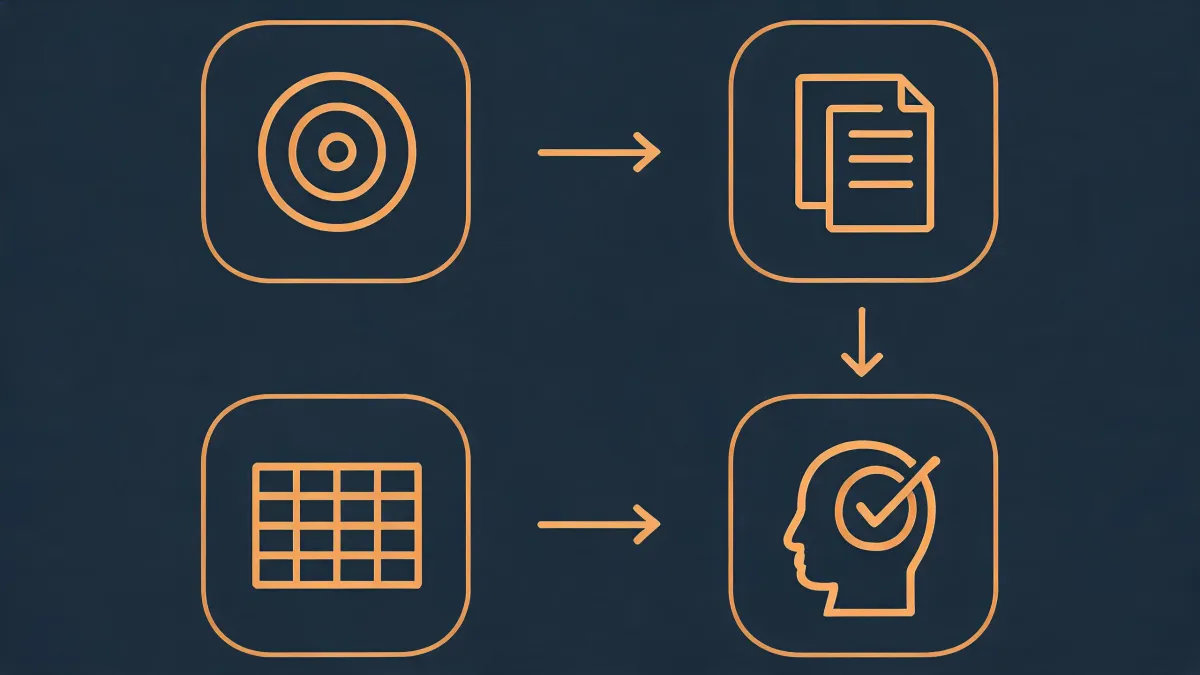
One workflow is the stack most teams built first: buyer intent data providers feeding account lists, a LinkedIn scraper feeding contacts, and manual enrichment before anything goes to an SDR. The other is agent-native: the tool itself identifies prospects, verifies and enriches them, then sequences outreach—with a human approving before send.
I've run both. At the end of 2023, the old stack was costing us about $3,200 per month in subscriptions, and our best sales reps were spending 11 hours a week just cleaning lists. This comparison is the checklist I wish I'd had before we switched.
The comparison framework: what you're actually choosing between
Let me define both sides clearly, because the words get muddy.
Option A: buyer intent data + LinkedIn scraping + your own outreach layer. You buy access to a data provider that claims to track buying intent, you pull a list of accounts showing 'in-market' behavior, and then you scrape LinkedIn to hunt for the right person at those accounts. You verify emails, upload to your sequencing tool, and pray your message doesn't feel like a template.
Option B: agent-native prospecting (where Okki-Go lives). The agent starts with your ICP, builds the prospect list from multiple signals, enriches through a waterfall, scores the buying intent evidence it finds, writes the first draft, and runs the sequence—with a human-in-the-loop checkpoint. You don't assemble five point solutions; you configure one workflow.
That doesn't mean Option A is stupid. It isn't. But the dimensions you compare them on should be specific. Here are three that mattered to us.
Dimension 1: What buying intent signal actually tells you
Buyer intent data providers are good at one thing: telling you which accounts have recently researched topics or product categories. That's genuinely useful for ABM and account prioritization. Gartner's research on B2B buying (often cited since 2019) makes the case that buyers do most of their evaluation before contacting sales, so third-party intent can flag accounts earlier than your own pipeline data would.
The problem is what those signals don't tell you. They don't tell you which person on that account has the budget, whether the timing is real, or whether the person you're about to email can say yes. In March 2023, we had an intent provider flag 900 'high-intent' accounts. We enriched them, sent personalized sequences, and got exactly 4 replies. Four.
That's the trigger event that changed how I think about this. It wasn't that the intent data was false. It was that account-level interest doesn't equal contact-level readiness. The agent-native workflow we tested later didn't magically fix targeting either—but it kept the human in the loop on the right questions: does this person match the ICP, does this company show a reason to care now, and is the message addressing a real pain. Agent-native made us check those before spending credits, not after.
Here's the nuance most content skips: buying intent signal is still valuable as an input, not as the whole picture. If you already have an ABM motion, keep the intent provider. If your goal is contact-level outbound pipeline, agent-native prospecting will create its own signal—through replies, objections, and meeting outcomes—that matters more than a 'spike in page views' ever did.
Dimension 2: What permissions does Okki-Go require
This is the question that comes up in every security review, and it's a fair one. When we evaluated Okki-Go, the permission request wasn't a scary 'give us your entire CRM and LinkedIn account' screen. It was scoped to what the agent needs to do the job:
- A LinkedIn connector (with Sales Navigator if you have it) so the agent can identify prospects, check role fit, and pull public profile details for personalization. It doesn't need your private messages or full network graph.
- An email sending mailbox—typically a dedicated domain inbox—so sequences can send on your behalf. This shouldn't be your personal email or your CEO's inbox.
- CRM access (optional but recommended) so the agent can create contacts, log activities, and sync replies back to your pipeline.
I want to be careful here: I'm describing the permission philosophy, not the latest settings screen. Vendor docs change, and LinkedIn's terms keep evolving. What I can tell you from a real deployment is that we approved the LinkedIn and email connectors first, tested on a small campaign, and only then expanded scope.
Compare that to the old stack. The scraper needed browser-level access to LinkedIn, sometimes even your personal session. The enrichment tool needed API access to your email data. The sequence tool needed inbox permissions. Each one was a separate approval, and the total attack surface was bigger than one consolidated agent—not because the tools were malicious, but because there were more places to misconfigure.
So answer: Okki-Go requires LinkedIn and email permissions to do agent-native prospecting, but it doesn't need keys to the entire kingdom. You can (and should) set it up with restricted connectors, dedicated inbox, and a human approval step before it sends anything. If a potential tool demands admin access across your whole Google Workspace just to start prospecting, that's a red flag.
Dimension 3: Where LinkedIn scraping fits into an agent-native prospecting workflow
Short answer: it fits at the beginning, as a seed, not as the ongoing engine.
In an agent-native workflow, the agent is supposed to do its own sourcing and enrichment. If you're still scraping LinkedIn profiles to feed it, you're building the old stack with a new UI. That's not automatically wrong—we've done it—but it's a sign you should understand why.
LinkedIn scraping was never really about getting 'leads.' It was about getting the data missing from your CRM: who changed jobs, who has decision-making authority, what the org chart looks like now. The scraping method just happened to be how teams got that data quickly.
Agent-native tools replace the scraping step with connectors and enrichment waterfalls. Instead of pulling a CSV of 2,000 scraped profiles, the agent checks the profile, validates the person still works there, confirms the email format through deliverability verification, and only then proposes the contact for a sequence. That's a meaningful difference in accuracy and deliverability. We caught many bad records this way that a scraper alone wouldn't have flagged.
One caveat: some platforms overpromise on verification. We did not find that any tool gives 100% accurate email data, and you shouldn't trust one that claims it does. Good agent-native workflows will flag uncertain email addresses rather than send into the void.
So to answer the query directly: LinkedIn scraping fits into agent-native prospecting only if you're using it to enrich, not to generate a raw list that bypasses verification. If you treat scraped profiles as 'ready to send,' you're recreating the exact problem the agent was supposed to solve.
Okki-Go alternatives, honestly compared
Since you came here for Okki-Go alternatives, here's a useful way to frame the choice. There are three buckets, and they don't compete the way you'd expect:
- Other agent-native platforms. This is the direct comparison: Artisan's Ava, 11x, and similar AI SDR platforms. They all claim agentic outbound, but they differ in execution—especially around enrichment depth, LinkedIn data access, and how much human oversight they actually enforce. Test those specifics, not just 'who can write a cold email.'
- Engagement platforms with added AI agents. These are sequencing tools (Instantly and others in that category) that bolted on AI agents or AI email writing. They're strong if you already have a list and want to improve sending; they're weaker if you need the agent to source and qualify accounts from scratch.
- Buyer intent data providers. ZoomInfo, 6sense, and intent-focused platforms aren't direct Okki-Go alternatives. They're inputs. If you love your account-level intent data, look for agent-native tools that can consume those audiences instead of replacing them.
My experience is based on mid-market SaaS in the US and EU. If you're selling in a market where LinkedIn adoption is lower, or where buyers expect phone-heavy follow-up, the balance might shift—I can't speak to every segment. That sample limitation matters more than reviewers admit.
What I'd pick now
After the Q1 2024 migration, we kept the intent provider for account prioritization and put Okki-Go on top for contact-level execution. Even after making that call, I kept second-guessing: what if we're overcomplicating it by keeping two tools? The two months until we saw reply rates improve were stressful. But the data eventually answered it: the agent-native workflow produced more qualified conversations per hour of human time than the scrape-and-pray method did.
Is agent-native prospecting better in every situation? No. Manual, low-volume outreach still makes sense for small target lists where every message needs deep human judgment. And buyer intent data providers still win when you need account-level visibility across a broad market. If you're doing high-touch ABM with 50 accounts, don't replace your stack. If you're a B2B team assembling or scaling an outbound motion, Okki-Go or a similar agent-native platform is the workflow I'd build around.
Don't buy the hype that it replaces your SDRs. It doesn't. What it replaces is the work most SDRs hate: list building, enrichment, and guessing which account matters. That's a trade I'll make again.