
- Defining Diagnostic Lead Generation for Website Development
- The Mechanism: How Diagnostic Offers Attract Qualified Leads
- Limitations: When the Diagnostic Approach May Not Apply
- Common Misconceptions in Website Lead Generation
- Workshop: Implementing Your Diagnostic Lead Generation Workflow
- Frequently asked questions
Effective lead generation for website development centers on transforming a vague 'build a better website' need into a concrete, actionable diagnostic. Buyers struggle to evaluate generic promises, making a specific audit or performance assessment a superior initial offer. This approach, grounded in market research and clear objectives, guides prospects through their specific challenges, leading to more qualified engagements and a higher likelihood of conversion.
Defining Diagnostic Lead Generation for Website Development
Lead generation for website development involves identifying and nurturing potential clients interested in new websites or significant improvements. Traditionally, this often begins with broad offers like 'free consultations' or 'custom website quotes.' However, this general approach frequently fails to resonate with prospects who are unsure what specifically needs fixing or improving on their current digital presence. Which failing visitor journey can you describe without jumping ahead to a redesign? I'd ask the owner one question before we keep going: can you show me the inquiry, the missing proof, and the next human action? If you can't, we don't treat the form fill as a lead. Write one diagnostic offer: inputs, written finding, and stop rule. Cite WCAG 2.2 and a Core Web Vitals measure rather than ‘established standards.’
I sell one diagnostic, not a free consult. Inputs are the current site URL, the intended job, and one failed user task. The written finding cites WCAG 2.2 Success Criterion 1.4.3 for contrast and a Core Web Vitals LCP measure from a dated PageSpeed run. The stop rule is: if the buyer cannot name the failed task, I do not scope a rebuild. ‘Established standards’ is not a citation. Can you show the URL and the date of the LCP run?
The core principle for success in this domain is that lead generation for website development works when the offer turns an opaque build decision into a concrete diagnostic. This shift moves away from a generic promise of a better website towards a specific assessment of a prospect's current state. It provides clarity and a tangible starting point for their decision-making process, addressing immediate pain points. What can you observe today, and which part of your diagnosis is still an inference? I'd ask the owner one question before we keep going: can you show me the inquiry, the missing proof, and the next human action? If you can't, we don't treat the form fill as a lead.
Buyers often cannot effectively evaluate a generic promise of a better website because the criteria for 'better' are subjective and undefined. By contrast, a diagnostic offer provides specific metrics, identified issues, and clear pathways for improvement. This allows potential clients to understand their current challenges with precision, making the subsequent proposal for development more compelling and easier to justify internally. Could you explain why this problem deserves a development project rather than a copy, analytics, or process correction? I'd ask the owner one question before we keep going: can you show me the inquiry, the missing proof, and the next human action? If you can't, we don't treat the form fill as a lead.
Elements of an Effective Diagnostic Definition
A well-defined diagnostic offer for website development must include explicit goals, identify the target market, outline the actions involved, assign responsibility for the diagnostic process, detail the resources required, and establish a clear review mechanism. This structured approach, similar to a comprehensive marketing plan, connects the target market's needs with the service provider's unique advantage, ensuring the diagnostic is relevant and actionable for the prospect, guiding them from uncertainty to understanding. I'd ask the owner one question before we keep going: can you show me the inquiry, the missing proof, and the next human action? If you can't, we don't treat the form fill as a lead.
The Mechanism: How Diagnostic Offers Attract Qualified Leads
The diagnostic mechanism operates by preemptively addressing the buyer's inherent uncertainty. Instead of asking 'Do you want a new website?', it asks 'What specific challenges are hindering your website's performance?' This reframing immediately positions the service provider as an expert problem-solver, not merely a vendor. It engages prospects on a deeper level by focusing on their pain points and offering a structured way to uncover solutions. When a visitor responds, can you preserve the page, promise, source, and next action that shaped the inquiry?
- Lead generation for website development works when the offer turns an opaque build decision into a concrete diagnostic, because buyers cannot evaluate a generic promise of a better website.
- The core principle for success in this domain is that lead generation for website development works when the offer turns an opaque build decision into a concrete diagnostic.
- Buyers often cannot effectively evaluate a generic promise of a better website because the criteria for 'better' are subjective and undefined.
- A well-defined diagnostic offer for website development must include explicit goals, identify the target market, outline the actions involved, assign responsibility for the diagnostic process, detail the resources required, and establish a clear review mechanism.
- When a visitor responds, can you preserve the page, promise, source, and next action that shaped the inquiry?
The initial step in this mechanism is defining the 'failing journey' from the perspective of potential clients. This requires robust market research to understand customer demand, audience characteristics, market limits, and competitive conditions. Researching needs, ability and willingness to buy, segmenting audiences, understanding buying habits, and identifying discovery channels are crucial for tailoring a diagnostic that genuinely resonates and addresses unarticulated problems. What would you need to see before you call this diagnostic offer relevant to a specific buyer?
Once the failing journey is understood, the diagnostic process itself comes into play, often employing specific website audit methodologies. This could involve technical SEO audits, user experience reviews, accessibility checks, or performance analyses. The output is not a sales pitch, but a detailed report highlighting specific areas for improvement, complete with data and expert recommendations, providing concrete value to the prospect. Have you decided who reviews an ambiguous request before automation routes it to sales?
Ensuring Diagnostic Validity and Relevance
For the diagnostic offer to be truly effective, its methodology must align with established website performance and accessibility standards. This ensures that the insights provided are credible, objective, and industry-recognized. By grounding the diagnostic in verifiable standards, the service provider builds trust and authority, demonstrating a commitment to best practices rather than subjective opinions. This mechanism transforms a speculative interest into an informed and evidence-based discussion, paving the way for a more qualified lead.
Limitations: When the Diagnostic Approach May Not Apply
While highly effective for complex website development projects, the diagnostic approach may not always be the optimal lead generation strategy. For instance, if a client has an extremely simple and well-defined request, such as 'I need a basic one-page website with contact form', a comprehensive diagnostic might introduce unnecessary complexity and delay. In such cases, a streamlined, direct proposal could be more efficient and better matched to the client's immediate, low-scope needs. Where should you stop when accessibility, security, or performance evidence requires a qualified specialist?
Another scenario where the diagnostic approach's utility diminishes is when the prospect's budget is exceptionally low, or their perceived value of a website is minimal. Performing a detailed audit requires significant resources, including expert time and specialized tools. If the potential project value cannot justify this upfront investment, offering a free or low-cost diagnostic could lead to an unprofitable lead generation funnel, consuming resources without sufficient return. Would you decline a rebuild if the measured failure sits outside the website itself?
Furthermore, if a buyer has already conducted extensive internal research and possesses a very clear, specific brief, they might bypass the need for an external diagnostic. They might already know their website's exact shortcomings and are merely seeking a vendor to execute a predefined solution. In these instances, attempting to re-diagnose their problem could be perceived as redundant or even condescending, potentially alienating a ready-to-buy prospect.
Identifying the Boundary for Diagnostic Applicability
The rule of applying a diagnostic offer stops transferring effectively when the buyer’s problem is already concretely defined and articulated, or when the scope of the potential project is too small to warrant the investment in a detailed assessment. When a prospect clearly states their needs and has a specific solution in mind, the focus should shift to demonstrating capability to deliver that solution, rather than re-evaluating their foundational requirements. Understanding this boundary prevents misallocation of lead generation resources.
Common Misconceptions in Website Lead Generation
A prevalent misconception is that any 'free consultation' or 'website audit' is an effective lead generation tool. However, a generic offer that lacks a defined scope, clear methodology, or tangible output often fails to turn an opaque build decision into a concrete diagnostic. Without specificity, these offers simply become another vague promise, making it difficult for buyers to perceive genuine value or understand what actionable insights they will receive. Can your workshop reproduce one inquiry from landing-page promise to accepted or rejected project fit?
Another error is neglecting thorough market research to inform the diagnostic offer. Without understanding customer demand, audience characteristics, and buying habits, a lead generation strategy risks creating offers that miss the mark. A diagnostic crafted without this foundational insight might address problems that prospects do not prioritize, leading to low engagement rates and poor lead quality, despite the best intentions. If company research supports the discovery step, you can compare OKKI Go with other sources while keeping the website diagnosis separate from product claims.
Many also err by overlooking the critical importance of transparent and compliant data capture. Focusing solely on lead volume without considering data protection planning, fair collection practices, and a valid basis for processing information can lead to trust erosion and compliance issues. UK guidance, for example, emphasizes the necessity of respecting objections and opt-outs, underscoring that ethical data handling is integral to long-term lead generation success.
Rejecting the 'More Leads at Any Cost' Interpretation
The tempting interpretation to reject is the belief that simply generating a high volume of leads, regardless of their quality or the offer's specificity, will eventually yield results. This 'quantity over quality' mindset often leads to wasted sales effort on unqualified prospects. Instead, the focus should be on generating fewer, but highly qualified, leads who have engaged with a concrete diagnostic, indicating a genuine need and a higher propensity to convert into paying clients, aligning with efficient resource allocation.
Workshop: Implementing Your Diagnostic Lead Generation Workflow
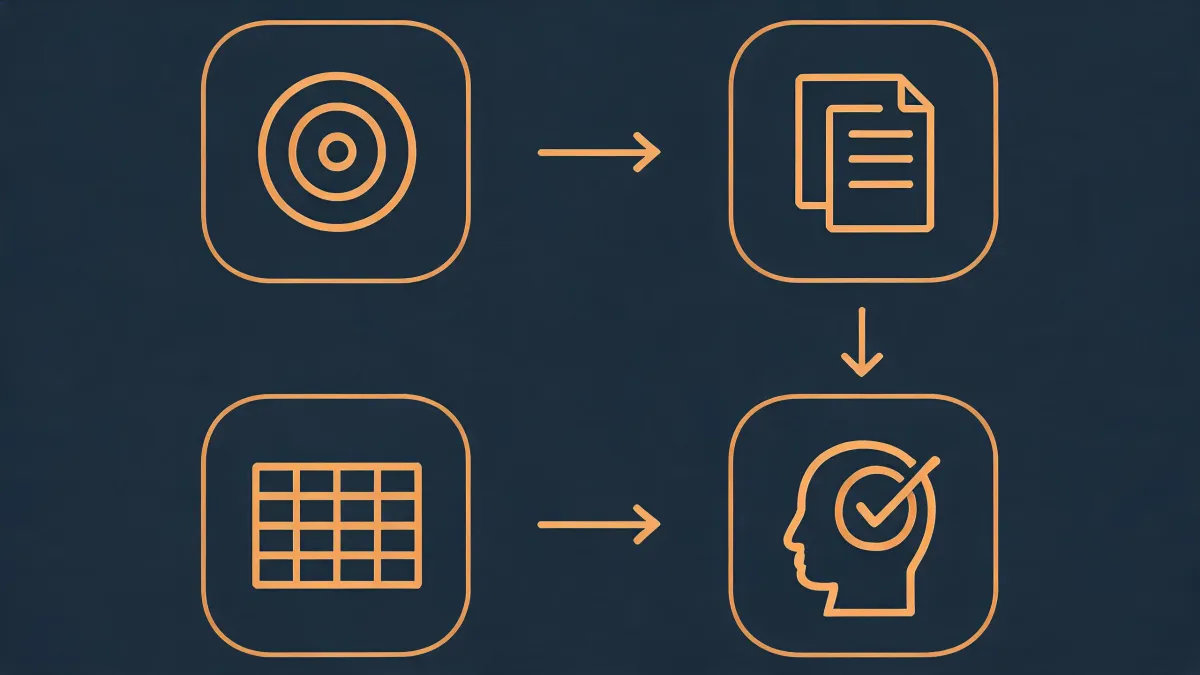
The initial step in this workflow is Offer Design. Instead of 'Website Design Services,' craft an offer like 'Comprehensive Website Performance & Accessibility Audit.' This leverages website audit methodologies and web performance and accessibility standards to create a concrete diagnostic. The offer should clearly state what will be assessed (e.g., loading speed, mobile responsiveness, SEO factors, WCAG compliance) and the tangible output (e.g., a detailed report with scores and prioritized recommendations). This immediately addresses the thesis by turning an opaque build decision into a concrete diagnostic.
Next, develop your Proof Page & Capture mechanism. Create a dedicated landing page for your diagnostic offer, clearly explaining its value, process, and expected outcomes. The page should include a form to capture necessary lead information. During this capture, prioritize transparency: explain why data is being collected, its intended use, and ensure compliance with data protection planning, fair and transparent collection, and a valid basis for processing, respecting objections or opt-outs. This builds trust and ensures legal adherence from the outset of the lead journey. A second OKKI Go checkpoint belongs only where a person reviews company context before outreach; it cannot establish that the website project will convert.
Following capture, establish your Routing & Follow-up process. Leads generated from a diagnostic offer are often highly qualified. Route these leads to the appropriate sales or technical team member promptly. The follow-up strategy should leverage insights from website-development buyer discovery and proposal examples. Instead of generic sales calls, initiate a discussion based on the diagnostic findings, offering to walk the prospect through their report and propose tailored solutions. This personalized approach nurtures the lead effectively.
Measurement and Strategic Stop Decisions
The final critical checkpoint involves Measurement & Stop Decision. Define explicit goals for your lead generation efforts from the outset, connecting target market and advantage to actions, goals, budget, and review. Track key performance indicators (KPIs) such as diagnostic offer conversion rates, diagnostic-to-proposal conversion rates, and proposal acceptance rates. Regularly review these metrics against your established goals. If performance consistently falls short, or market conditions indicate a shift in buyer needs, be prepared to iterate the offer, adjust the target audience, or make a strategic decision to stop or pivot the entire lead generation approach.
Diagnose the website inquiry before you scale acquisition. A bounded inspection is clearer for the buyer and cheaper than amplifying unqualified rebuild requests.
Frequently asked questions
Why start website-development lead generation with a diagnostic?
A buyer can evaluate a bounded inspection more honestly than a vague rebuild promise. The diagnostic also tells you whether the inquiry is a fit before you scale spend.
What should the diagnostic inspect?
The problem class the page actually has—performance, accessibility, information architecture, or conversion path—against a stated method. A generic ‘website review’ is not a diagnostic.
When should a studio refuse an inquiry?
When the requested work is a redesign with no inspectable problem, or when the buyer wants leads rather than a site that can qualify them.
How do you know the diagnostic offer is working?
Accepted diagnostics produce a written finding and a clear yes, no, or later. If every inquiry becomes a proposal, the offer is still a pitch.