
I review things before they go out. My title is quality/compliance manager, which basically means I’m the person who says “no” when everyone else wants to ship. I review hundreds of deliverables a year—maybe 250, I’d have to check the tracker—and reject roughly 18% of first-time submissions. That sounds harsh, but it saves us a ton of rework.
So when someone asks me, “How does website intent data features fit into an agent-native prospecting workflow?”, I usually answer with another question: What are your quality gates?
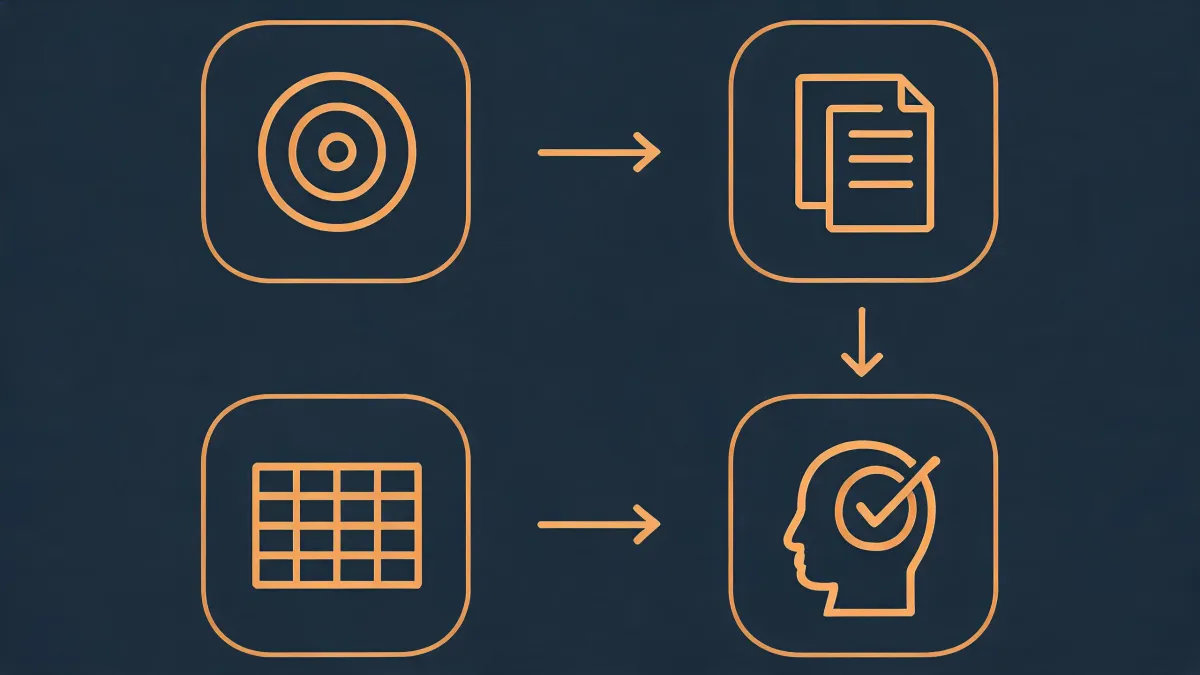
Intent data only belongs in an agent-native workflow if it’s passed through a quality gate before an agent is allowed to act on it. That’s not a technical opinion. It’s a quality-control opinion. And I think people at Clay already get this, because the platform’s value isn’t just collecting data—it’s controlling what the data does next.
Website Intent Data Is a Supplier, Not a Source of Truth
Website intent data is useful, but it’s noisy. A person searching for “Salesforce alternatives” could be evaluating a purchase, comparing tools, or writing a blog post. You don’t know from the event alone. That’s why I like an Intent Data Topics Plan. It forces you to turn a fuzzy behavior into a clear rule: “if an account from my TAM visits pricing twice in 7 days and matches at least 3 topics in my plan, flag it.”
If you skip that plan, you’re not doing targeting. You’re building an expensive list of “somebody looked at something.” In quality terms, an intent data feed is a supplier. You wouldn’t accept a shipment of parts without inspecting them. The same logic applies to contact records from an enrichment feed. Check completeness, accuracy, and timeliness before the agent uses them.
Too many people evaluate lead generation features by how many records the tool returns. That’s how you get quantity without quality. A better feature is one that lets you set rules to suppress bad matches, merge duplicates, and only pass clean records to the next step.
Agents Amplify Mistakes, So You Need Test Gates
An agent-native prospecting workflow can enrich a lead, write a personalized email, and update your CRM without a human clicking. That’s a game-changer. But if the input is wrong, the agent will scale the wrongness. A single bad intent trigger could generate hundreds of bad outreach messages before anyone notices. In quality, we call that a batch failure.
Five years ago, it was enough to pull a list and start emailing. In an agent-native workflow, the workflow itself is the deliverable. The agent doesn’t second-guess the data. If the enrichment says the job title is “Head of Growth,” the agent writes a line about growth. If the email is outdated, the agent sends it anyway. That’s why quality gates aren’t optional. They’re the difference between a lead generation system and a spam generator.
Use the Clay Platform Free Trial to Test Enrichment Workflows
If you’re evaluating Clay, don’t spend the free trial just clicking around the UI. Use it to try to break the workflow. The Clay platform free trial is where I’d test enrichment workflows before building the full agent-native pipeline.
Here’s a simple audit I recommend:
- Take 20 records where you already know the correct email and job title.
- Run them through your intended enrichment workflow.
- Check how many come back complete, how many are current, and how many are wrong.
- Then test the automated outreach step on a tiny branch.
My experience is based on mid-market and enterprise B2B teams. If you’re in SMB, your tolerance for bad records might be different because your volume is lower. If you’re in enterprise, bad data at scale can cost more than a redo—it damages sender reputation and trust in your sales team.
And if “meer integration clay” is one of the searches that brought you here, the same rule applies. A new integration is still a supplier until it proves itself. Does it meet your spec? Are the fields consistent? Does it comply with GDPR and CCPA? “It works” is not enough detail for a quality review.
Oh, and one more thing: test your CRM mapping at the same time. Enrichment can be perfect, but if the workflow writes contacts into the wrong stage or creates duplicate accounts, you’ve just built a cleanup project.
“We’ll Clean It Later” Is a Red Flag
When I ask teams why they didn’t add quality gates to their agent-native workflow, the most common answer is “we’ll clean it later.” That’s a red flag. Cleaning later means the bad data has already been used to send emails, update records, and train the agent’s behavior. That’s not a cleanup. That’s a redo.
I once caught a workflow that was about to send to 4,000 contacts with no dedupe step. Maybe 4,200—I’m mixing it up with another project. The first few replies were from the same person, so we stopped the sequence. So glad we caught it before the full send went out. We dodged a bullet, but it cost us a day of recovery and a few awkward calls.
In quality, you inspect during the process, not after. An agent-native prospecting workflow needs testing as part of the build, not after the first complaints arrive.
Bottom Line: Set the Spec, Then Let the Agent Run
Clay is a powerful platform for building an agent-native prospecting workflow. But the platform doesn’t choose quality for you. You set the spec. You define the topics, thresholds, fields, and acceptance criteria.
The fundamentals haven’t changed: a spec is still a spec. If you enforce it, website intent data can be a real advantage. If you don’t, you’re just automating your blind spots. So inspect what you expect, or expect rework.