
April 2024: I Suddenly Owned the Sales-Tool Budget
Our RevOps lead resigned on a Tuesday. No transition plan, no handoff doc—just an HR email at 4:17 pm and a Slack message from our CFO the next morning: "Can you take over the sales-tool vendor work while we figure out the backfill?"
For context: I'm the office and operations manager for a ~300-person B2B SaaS company. I manage about 22 vendors and roughly $145K in annual spend across everything from office supplies to SaaS license renewals. I report into both operations and finance. I'm not an SDR. I've never run an outbound sequence. Before that April, I couldn't have told you the difference between intent data and firmographic data if my life depended on it.
So when the CFO asked me to "evaluate our LinkedIn prospecting stack and make a recommendation by end of next month," I did what any generalist would do: I opened a spreadsheet and started Googling.
What Looked Like a Normal Vendor Comparison
I built the obvious matrix. Seventeen rows, twelve columns. I requested demos from half a dozen tools—okki-go, LinkedIn Sales Navigator, and a handful of others. I read feature pages until my eyes crossed.
Every single product promised roughly the same thing: more leads, better data, higher reply rates. Every demo was polished. Every AE told me their email verification was "basically best-in-class."
Per the FTC's advertising guidance (ftc.gov/business-guidance/advertising-marketing), claims like that are supposed to be substantiated with evidence. In practice, nobody can verify that mid-evaluation, and my job wasn't to litigate anybody's marketing copy—it was to pick a vendor and move on.
By the end of week two I had a shortlist that looked defensible. Three finalists, ranked by a scoring rubric I'd invented on the fly. Then a single question detonated the whole thing.
The Question That Broke the Evaluation
It was a 20-minute call with an AE from okki-go. She'd walked through the standard agent-native prospecting pitch—waterfall enrichment, intent signals, the human-in-the-loop piece. Then she paused and asked:
"Before we talk about adding anything, can I ask—what does your current contact data actually look like?"
I said I'd get back to her. Which is what you say when you don't know the answer.
I didn't know the answer. Nobody did. We had roughly 40,000 contact records in our CRM, built up over six-plus years and two acquisitions. Some records dated back to 2018. Some were test data. Some were probably people who'd changed jobs three times. Nobody had ever run a real cleanup on them.
So I got temporary admin access and ran our list through two email verification tools. The results weren't catastrophic, but they weren't fine either:
- Around 28%—maybe 30%, I'd have to rerun it—of emails came back invalid or high-risk (hard bounces, disposable domains, malformed addresses)
- Roughly 15% of records were duplicates across different accounts
- About 9% of the contacts marked "active customer" hadn't touched a deal in over two years
None of that was any vendor's fault. It was ours. We'd been sending outbound against a list that was decaying under our feet.
Decision Under Time Pressure
Here's what I want to be honest about: I did not have time to do this properly. I had three weeks to recommend something to the CFO, and a budget number already locked. Normally I'd run a 60-day pilot, measure results against a control, and go from there.
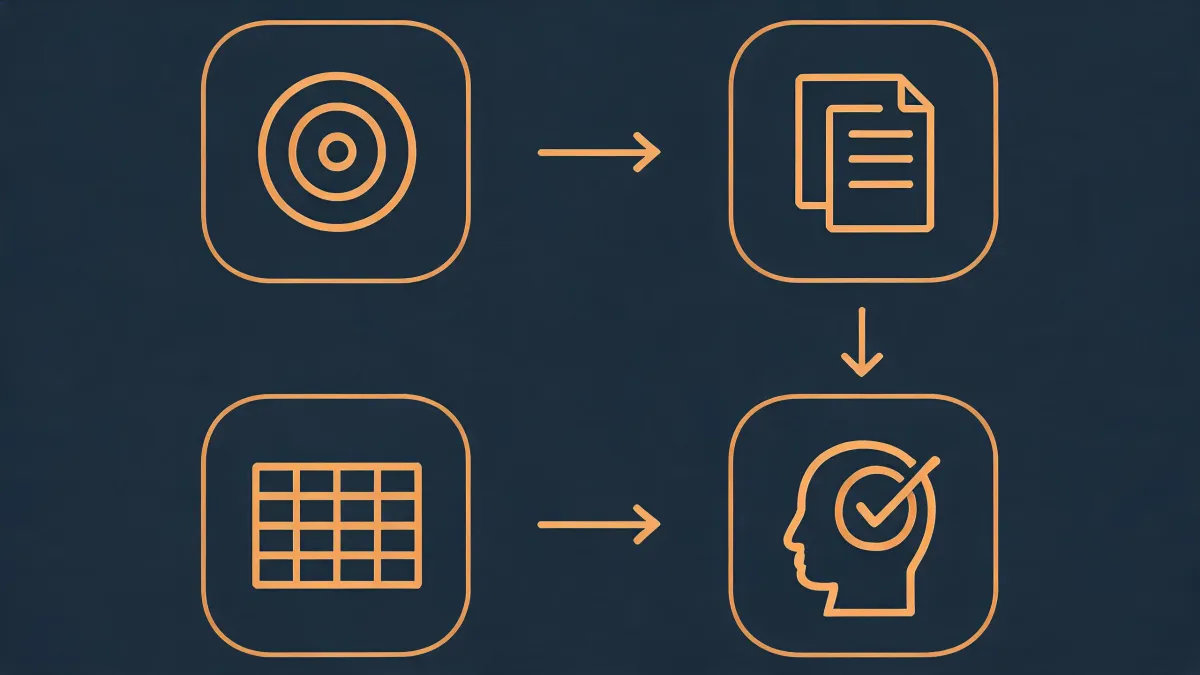
There was no time for that. So I made a call with incomplete information: I reframed the whole project. Phase one wouldn't be "buy prospecting software." It would be "find out what's actually in our contact list."
I pulled the plug on the three-way bake-off, spent a fraction of the budget on a data cleanup pass using one of the validation tools we already had access to, and then re-ran the vendor evaluation with actual data quality baselines in hand.
Hit 'send' on that memo to the CFO and immediately started second-guessing myself. What if the cleaner data didn't move the needle and I'd just burned three weeks? Nothing felt settled until we saw the first three SDR reports come back after the cleanup.
What I'd Actually Have RevOps Teams Evaluate
If you're a RevOps lead being asked to sign off on a contact list vendor, or an ops generalist like me who got handed this by accident, here's the short list I wish I'd had on day one:
- Run your current list through a verifier before you talk to anyone. Otherwise you don't know the baseline, and every ROI projection becomes a guess.
- Calculate cost per deliverable contact, not cost per seat. A $99/month seat sounds cheap until you realize 30% of its output is bouncing.
- Ask who will actually use it daily. We once renewed a decent product for 11 months where exactly one of three SDRs ever logged in. Finance never saw that.
- Check whether it writes back to your CRM. If it exports to CSV instead of syncing, you've just created manual work, not removed it.
- Ask the vendor how they handle enrichment when the first source misses. Waterfall isn't a buzzword—it's the difference between 60% coverage and 85%.
On the Automation Question
I'm not an SDR, so I can't speak to sequence cadence or message personalization quality—that's genuinely outside my lane. What I can tell you from a procurement perspective is this: automation is only as good as the list it runs against. You can't automate your way out of a bad contact database. You can only burn through bad data faster.
Which is why the vendor we eventually went with was the one that put validation and enrichment ahead of volume promises. Not the cheapest. Not the one with the longest feature page. The one whose AE asked the boring question first.
Final number, for what it's worth: the contract we signed came in about 18% under the original budget line, mostly because we cut seats we didn't need once we knew which records were real.
What I Took Away
If I had to compress the whole quarter into one sentence for another ops person who suddenly inherits a sales-tool decision:
Before you buy a tool to find more contacts, find out what's wrong with the ones you already have.
Sounds obvious. Every RevOps person reading this is probably nodding. I got it wrong anyway because I treated it as a purchasing problem when it was really a data problem. The moment I reframed it, the shortlist changed, the negotiation changed, and even the definition of "good tool" changed.
One more thing. When that okki-go AE paused her demo to ask about our data, she wasn't pitching. She just stopped and asked the right question. It was the only time in about a dozen vendor calls that happened.
Worth remembering.