
-
Q2 2024: The $1,900 'Savings' That Cost Us Three Weeks
-
What I Got Wrong About Email Verification Accuracy
-
Where B2B Contact Data Actually Fits in an Agent-Native Prospecting Workflow
-
How We Configured Okki-Go in Our AI Agent
-
The Checklist I Now Require Before Any Outreach Prep
-
What Changed After 90 Days
-
The Lesson I Keep Re-Learning
Q2 2024: The $1,900 'Savings' That Cost Us Three Weeks
On a Tuesday morning in Q2 2024, I was sitting in our conference room with two spreadsheets open. I'm the procurement manager at a 180-person B2B SaaS company. I've managed our sales tech and outbound budget—$220,000 annually—for six years. I've negotiated with 14+ vendors, and I've documented every order in our cost tracking system.
We were comparing email validation service quotes for our first agent-native prospecting pilot. I assumed email verification accuracy was like paper stock: a spec you compare on a line item. The vendor with the lower cost per 1,000 records would win. That was my initial misjudgment.
I picked the less expensive option. We saved $800 on the annual contract. Three weeks later, I was explaining to our RevOps lead why our domain reputation had taken a hit and why we'd paused the pilot. (Unfortunate timing, to say the least.)
What I Got Wrong About Email Verification Accuracy
The vendor's pitch said “98% accuracy.” I read that as “98% deliverable.” They meant “98% syntax and domain validation.” Those are very different things.
I said “accuracy.” They heard “format accuracy.” Result: we loaded 4,200 contacts into our AI agent, and roughly 11% bounced or got flagged. Not catastrophic, but expensive. Don't hold me to this, but our internal estimate put the cleanup, re-verification, and lost rep time at about $1,900. Net loss: around $1,100. The $800 “savings” vanished fast.
Most buyers focus on cost per 1,000 verified emails and completely miss what's actually being verified. The question everyone asks is, “What's your price?” The question they should ask is, “What are you measuring—syntax, domain, mailbox existence, catch-all risk, or recent activity?”
Per FTC advertising guidelines (ftc.gov), claims must be truthful, not misleading, and substantiated with evidence. If a vendor says “98% accurate,” they should be able to explain what's being measured. Source: FTC Business Guidance on Advertising, accessed April 2026.
That's not a legal problem for them. It's a procurement problem for me. I should've forced the definition before signing.
Where B2B Contact Data Actually Fits in an Agent-Native Prospecting Workflow
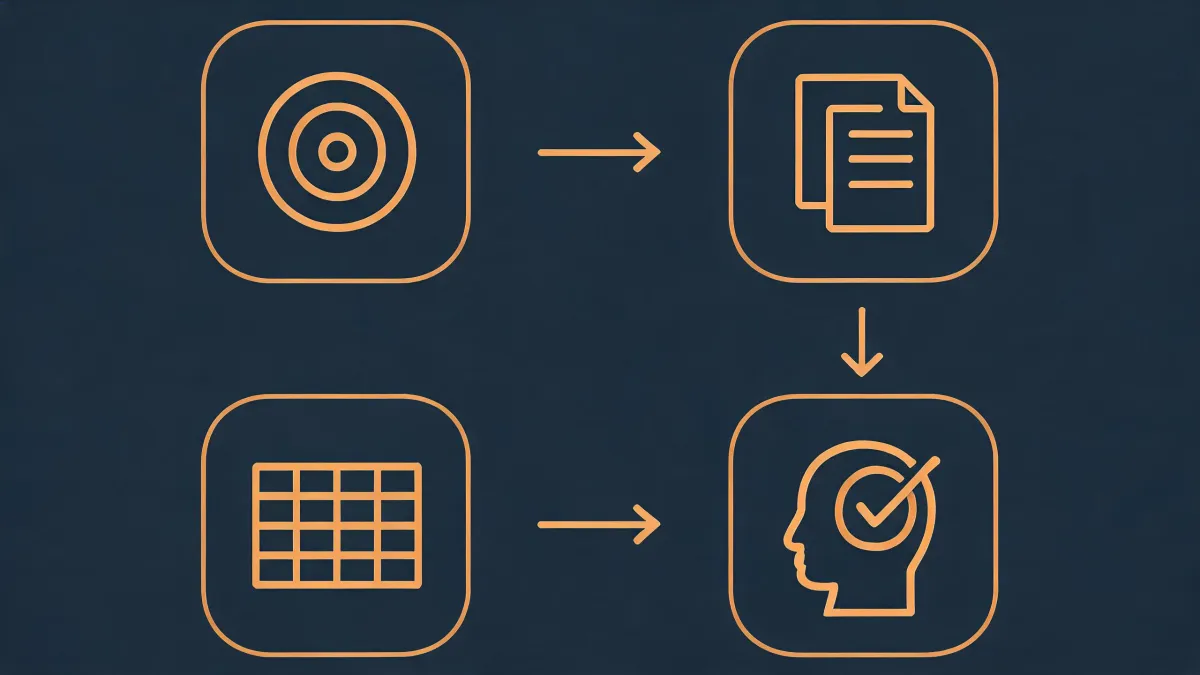
Before that Q2 mess, I thought contact data was step one. Upload a list, let the AI agent personalize, send. The real question—how does B2B contact fit into an agent-native prospecting workflow—became clearer after the bounce spike. It's not a list you upload. It's a gate.
In our old workflow, a B2B contact was just a row: name, title, company, email. In an agent-native workflow, that row becomes a set of permissions. Is the email verified? Is the company a fit? Is there an intent signal? Has this person been contacted recently? Should a human review this before the agent sends?
That's when we started rebuilding our Okki Go outreach preparation workflow. Not as a one-time cleanup, but as a pre-flight sequence that runs before any sequence launches.
How We Configured Okki-Go in Our AI Agent
I'm not a RevOps engineer. I'm the person who signs the contracts and tracks the invoices. So when our RevOps lead asked how to configure Okki Go in an AI agent, I gave her constraints, not prompts.
We set four rules:
- Verification before enrichment. No contact enters the enrichment waterfall until it passes email validation. If it's catch-all or risky, it goes to a separate review queue. (Thankfully, Okki-Go supports human-in-the-loop steps.)
- Waterfall enrichment + intent, not either/or. We don't treat a verified email as a qualified lead. We match on company domain, then layer intent data. If intent is missing, the agent doesn't draft outreach—it creates a research task.
- Human approval on the first 50. For every new sequence, our SDR lead reviews the first 50 agent-drafted emails. After that, we sample 10%. This isn't about distrust. It's about catching systematic errors before they scale.
- One source of truth for suppression. We sync opt-outs, competitors, current customers, and recent replies into the Okki-Go workflow daily. The agent checks suppression before it drafts.
Roughly speaking, the setup took two weeks. Most of that was defining the rules, not clicking buttons. If you're configuring okki-go for the first time, spend your time on the rules. The prompts are easy to change later.
The Checklist I Now Require Before Any Outreach Prep
After my third mistake—this one and two smaller ones before it—I built a 12-point checklist. It's not glamorous, but it's the best-value insurance I've found. Five minutes of verification beats five days of correction.
Here's the short version:
- Ask the email validation service for its methodology, not just its accuracy rate.
- Run a 200-record test batch through the full agent workflow before a full launch.
- Check catch-all and role-based email rates separately.
- Confirm how often the data is refreshed.
- Verify that Okki-Go enrichment only overwrites fields you approve.
- Set a bounce-rate threshold that pauses the sequence automatically.
- Document who approved the list, the rules, and the date.
That last one sounds bureaucratic. It's saved us twice. When a bounce spike happens, I can trace it back to a specific batch, vendor, and rule change. No guessing.
What Changed After 90 Days
Ninety days after we rebuilt the Okki Go outreach preparation workflow, our bounce rate on pilot sequences dropped from around 11% to roughly 3.4%. I'm not 100% sure how much of that was the tool versus the process, but the rework hours fell by about 60%. Our SDR team stopped spending Fridays cleaning lists.
We also stopped measuring reply rates as our primary success metric for the pilot. Too noisy, too dependent on offer and timing. Instead, we tracked deliverability, enrichment match rate, and human edit rate on agent-drafted emails. Those are leading indicators we can actually control.
From a budget perspective, we didn't “save” money in a dramatic way. We avoided a repeat of the $1,900 cleanup. For a $220,000 annual budget, avoiding one or two bad vendor decisions is how you keep variance under control.
The Lesson I Keep Re-Learning
Prevention over cure isn't a slogan for me anymore. It's a line item. Every hour I spend checking email verification accuracy, vendor methodology, and agent permissions is cheaper than the hour I spend explaining a domain reputation problem to my CRO.
If you're evaluating an email validation service, or figuring out how to configure Okki Go in an AI agent, start with this: define what “accurate” means before you compare prices. Then build the gate. The agent can draft, enrich, and sequence. But the contact data has to earn its way in.
That's the version of agent-native prospecting I can defend in a budget review—and to the SDRs who have to live with the list I approved.