
-
The Mistake That Taught Me To Stop Chasing Data
-
Sales Intelligence Platform Features: The List I Actually Use
-
The Clay Enrichment Company Website Is Not the Product
-
Agent-Native Prospecting: What I Think It Actually Means
-
How Does LinkedIn Sales Navigator Integration Fit Into an Agent-Native Prospecting Workflow?
-
Wish I Knew: Clay as a Personal CRM
-
Intent Data Providers: Don't Make Them the Star
-
The Objections I Expected
-
What I'd Tell a Team About to Buy Clay
-
My Final Opinion
In 2019, I helped pick a sales intelligence platform for a 40-person B2B team. The demo made us look like geniuses. The contract made us look like fools. We paid for 50 million contacts, used maybe 11% of them, and spent most of 2020 building workarounds instead of pipeline.
I've now spent seven years in sales operations, and I've personally made 12 significant data and workflow mistakes. Roughly $28,000 in wasted budget is my conservative estimate. I keep a checklist now so new teammates don't repeat the same errors.
So let me say the opinion I've formed the hard way: A lot of B2B teams don't need more data. They need a workflow that turns the data they already have into action. Clay is interesting not because it has the biggest database, but because it gives you a place to design that workflow.
The Mistake That Taught Me To Stop Chasing Data
In my first year running outbound, I had access to a database that felt enormous. I searched, exported, enriched, and sent 1,400 cold emails. I didn't monitor bounce rates. I didn't check the accuracy of enriched phone numbers. I just trusted the tool. The result? A terrible sender reputation and a CFO who asked, in front of the whole team, “Who are we emailing?”
(Note to self: never let a demo's clean data claim replace your own sample test.)
That was 2018. Since then, I've learned that the question isn't “how many contacts?” It's “what happens after I have the contact?” A contact by itself is not pipeline. A contact plus the right next action is where the value lives.
Sales Intelligence Platform Features: The List I Actually Use
Sales intelligence platform features get compared on list sizes, pricing, and data coverage. Those are table stakes. After evaluating too many tools, I care about these features:
- Enrichment accuracy at the field level (not “match rate” — if the job title is wrong, the match was useless).
- Integration depth with the tools we already use (LinkedIn Sales Navigator, HubSpot/Salesforce, Slack).
- Automation that does something with enriched data — routing, scoring, personalization.
- Auditability: I can see where a record came from and why it matched.
Notice what's missing: “10 million more B2B contacts.” I'm not saying database size doesn't matter. It matters, but it matters less than the workflow around it.
The Clay Enrichment Company Website Is Not the Product
If you land on Clay's website looking for a standard enrichment provider — and I know some of you searched for “clay enrichment company website” because that's exactly what I did — you'll see features like enrichment, intent, and integrations. But the site, at least as of this writing in April 2026, is actually describing something more like an agent-native workspace. Enrichment is a component, not the whole product.
Kinda weird to explain, but think of it this way: most enrichment tools are vending machines. You input a domain, you get a contact. Clay is more like a small workshop where you set up the machine, connect it to other machines, and automate the entire production line.
Agent-Native Prospecting: What I Think It Actually Means
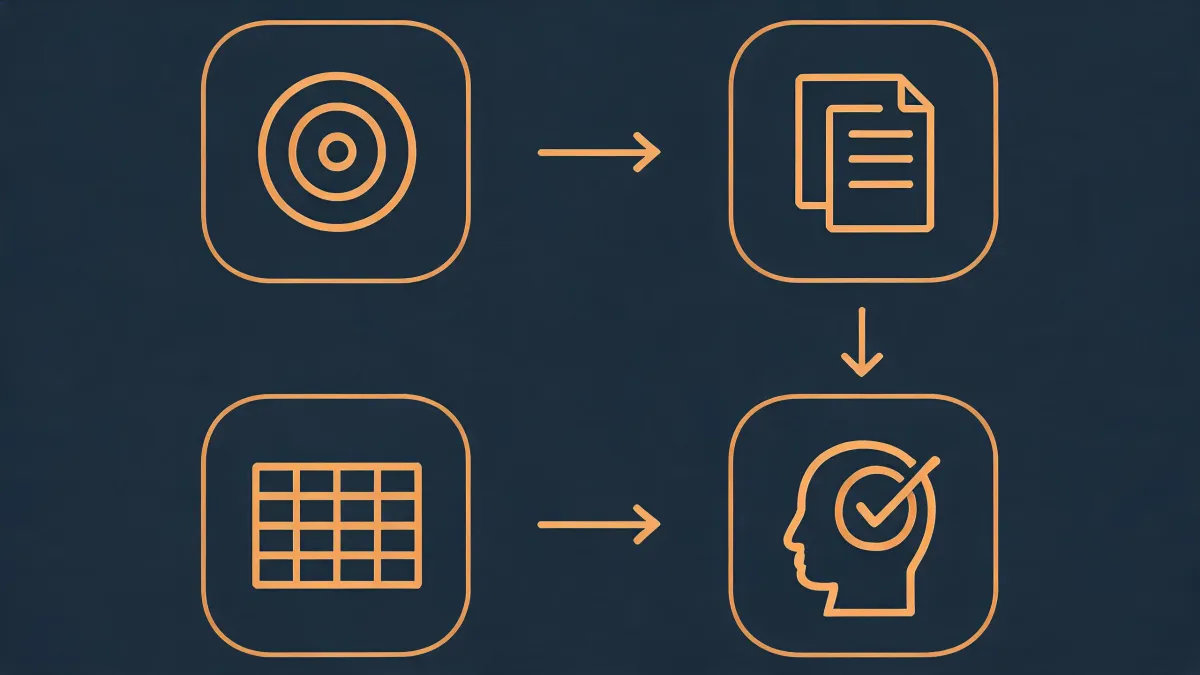
I've seen the phrase “agent-native prospecting workflow” on Clay's marketing materials, and I'll be honest: it didn't land until I built one. It means your prospecting process has a software agent that watches for a trigger, performs a set of tasks, and hands you a ready-to-act record.
The difference from old-school automation is that the agent has more context. It doesn't just say “when this is created, add to list.” It says, “A new person from this ICP list visited your pricing page. I enriched their work email, found their company's tech stack, and checked for recent funding. I also drafted three personalized lines based on their latest LinkedIn activity.” That's a workflow, not a data export.
How Does LinkedIn Sales Navigator Integration Fit Into an Agent-Native Prospecting Workflow?
This is one of the first questions I ask when teams talk about Clay. Here's the honest answer: Sales Navigator is the perfect input layer for an agent-native workflow, but it shouldn't be the whole system.
Saving a lead list in LinkedIn Sales Navigator is the trigger. Clay's integration can pull those saved leads, enrich them, score them, and then push them into outreach or a CRM. This isn't scraping LinkedIn (which I wouldn't encourage anyway). It's using the official integration to move the people you've already qualified into a context-aware workflow.
For our team, this changed where the work happens. Sales reps still research in Sales Navigator when they want a human-first exploration. But the repetitive “find email, check intent, log it” chores are handled before the rep ever sees the record. That's the balance I think most teams miss.
Wish I Knew: Clay as a Personal CRM
I also use Clay for a personal CRM. I have a table with people I've met at conferences, old colleagues, and a few investors. I track where we met, what we talked about, and when I last reached out. It's simple. I didn't need a dedicated personal CRM app because Clay's flexible model lets me set up exactly these fields.
That “clay personal crm” use case is nice, but it's not why you should buy Clay. If you just need to remember your network, a spreadsheet will do. Clay becomes valuable when the same flexible tables are connected to enrichment, intent data, and a CRM.
Intent Data Providers: Don't Make Them the Star
I don't have hard data on how much intent data improves outbound performance. I wish I had tracked it more carefully. What I can say anecdotally is this: intent data is useful when it's a filter, not a justification machine.
Early on, we used intent data providers to convince ourselves a company was “hot.” Then we'd add them to a sequence and email them the same generic message as everyone else. The intent signal didn't help because the workflow didn't change.
In Clay, intent data works well as an enrichment trigger or a scoring input. If a record has high intent, the agent can route it to a rep, add it to a priority list, or personalize the first email with a recent topic. That's context-dependent. For longer sales cycles, intent data is probably worth it. For short cycle SMB transactions, I'd spend the budget elsewhere.
The Objections I Expected
“This sounds like a glorified spreadsheet.” I get why it looks that way. The interface is table-heavy. But the agent logic is not a spreadsheet formula. You can write automated steps that check if a lead has a signal, enrich it, and send it to a CRM. That's closer to a lightweight internal tool than a CRM.
“Can't we just do this in Sales Navigator?” Possibly. For really small teams, yes. But you'd still need a place to combine Sales Navigator data with your own ICP rules, enrichment, and outreach. That's where the workflow comes in.
“This is more setup work than my current stack.” True. Clay has a learning curve. I still forget how to connect a table sometimes. But the setup pays off if you have repeatable prospecting motions. If every campaign is completely different, you might not need Clay yet.
What I'd Tell a Team About to Buy Clay
If you're evaluating sales intelligence platform features, start with the workflow, not the feature list. Map your current process:
- Where do prospects enter? (LinkedIn, events, inbound, etc.)
- What do you want to know about each one before a rep touches it?
- What next action should happen automatically?
- What needs a human decision?
Then look at how Clay can automate the middle steps. If you can't describe the workflow in writing, you're probably going to build something overcomplicated.
Also, remember compliance. Per GDPR, enrichment is lawful only when you have a legitimate interest and are clear about data sources. Accuracy is a core principle (Art. 5(1)(d)). CCPA adds its own complexities for California residents. In my checklists, I always verify the data source before running a large batch. That's not just legal caution — it's the same discipline that prevents my 2019 disaster.
Finally, check your data before you trust it. Enrich a sample of 50 records and manually verify 10. I've caught 47 potential enrichment errors in the past 18 months using this checklist. It takes 20 minutes. It saves me from another “Who are we emailing?” conversation.
My Final Opinion
Clay is not about having the most contacts. It's not a magic database. It's a workflow tool that happens to include data, enrichment, and intent. If you buy it because the sales intelligence platform features list looks impressive, you'll probably be disappointed. If you buy it because you want an agent-native prospecting workflow, you'll probably find yourself building the thing you actually needed all along.
That's the lesson that cost me $28,000, a few hundred thousand emails, and a decent amount of professional pride. I'd rather you learn it for free. Stop buying data. Start building workflows.