
-
Two workflows, not two logos
-
1. Data truth: who owns the record?
-
2. Okkigo human review workflow: why it changed my view
-
3. Verification depth: single source is not enough
-
4. Pricing transparency: what is not included is part of the price
-
5. How AI sales assistant features fit into an agent-native prospecting workflow
-
Finally, what about Okki Go alternatives in 2025?
Full disclosure: I am not the SDR or the RevOps leader. I am the person in the middle: I evaluate, purchase, and renew software for a 40-person B2B company, and I report to operations and finance. About 60-80 purchase orders go across my desk every year. So when the revenue team asked me to compare Okkigo alternatives, I didn't start with logos. I started with workflows.
Okkigo, sometimes written as Okki-Go, sits in a category called agent-native prospecting. But most real alternatives are not another single platform. They are the classic stack: lead generation software, an email finder and verification tool, an email sequence platform, LinkedIn automation, and CRM enrichment. In 2025, that is the comparison that matters.
Two workflows, not two logos
The classic workflow is fairly simple: build a list in a lead generation database, export it, clean it, upload it into an email sequence tool, set the cadence, and hope the integrations hold. It is not broken. For small teams, it remains the easiest model to understand.
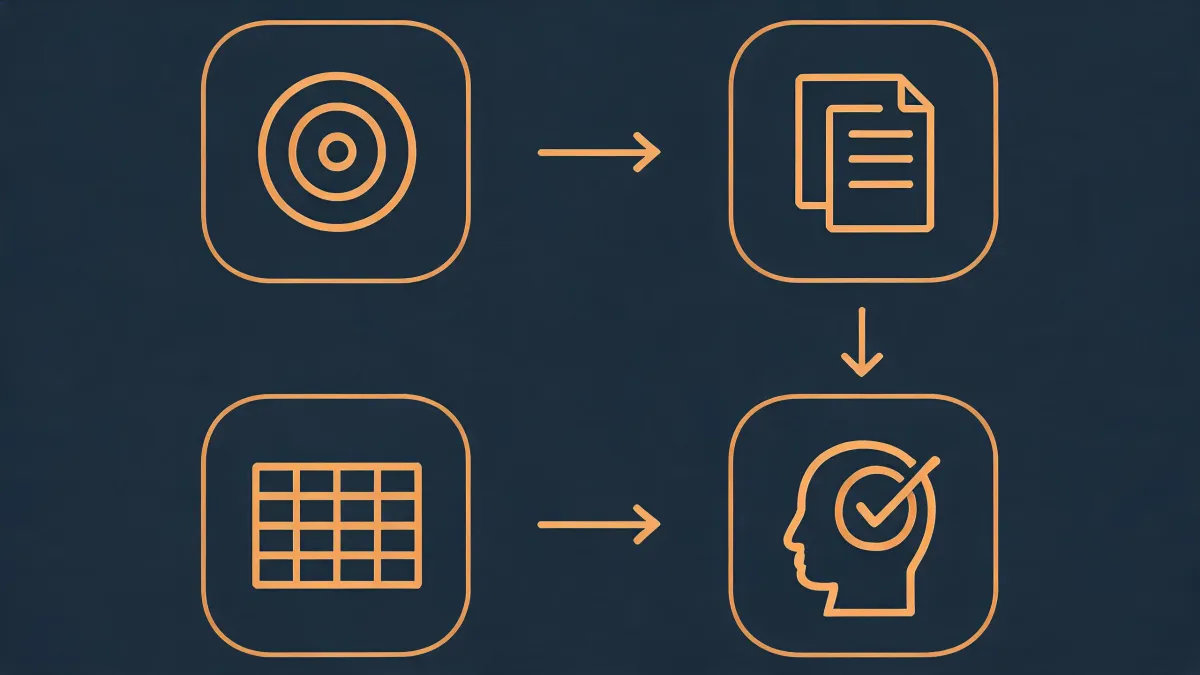
The agent-native workflow is different. Instead of a spreadsheet moving from one tool to another, one workflow owns targeting, enrichment, verification, multichannel sends, and human review. You give it instructions in plain language, but it waits for approval before it acts. In this article, Okkigo represents that model.
Here is the frame I used for comparing them:
- Data truth: Where is the latest version of a contact or account?
- Human review: Can a person understand and approve the full workflow before anything is sent?
- Verification depth: What happens when an email address is unclear?
- Pricing transparency: Is the first quote close to the final cost?
- AI role: Does the AI just write copy, or does it operate the workflow?
1. Data truth: who owns the record?
In the classic stack, the lead generation software has the original data, the email verification tool has its own status, and the sequence platform only knows what was uploaded. None of them talk continuously. If an account changes size or a contact leaves the company, the sequence tool may keep sending to a stale record for weeks.
In an agent-native workflow, data truth is tied to the workflow. Enrichment and verification are not occasional steps. They run before a record is accepted for outreach, and the same workflow controls what happens when a bounce or reply comes back.
My conclusion: For small, static lists, a database export is enough. For repeatable outbound, the data should live inside the workflow, not in a file you re-upload every month.
2. Okkigo human review workflow: why it changed my view
If you search Okki Go human review workflow, this is probably what you are asking: does the AI send first and let a human clean up later, or does a human approve before anything leaves the system?
In our pilot, Okkigo placed human review right after the system interpreted our brief. The SDR saw the proposed segment, the reason each contact was included, the draft email sequence, and the send rules. Then a person could edit or approve. No emails or LinkedIn messages went out before that review.
The honest counterpoint is that a separate sequence tool can offer something that an agent-native platform may not handle as well: manual approval on every single message at the exact moment of send. If you have very low volume and need absolute control, the simpler tool gives you that.
But here is what surprised me. Separate tools have more checkpoints, yet in practice those checkpoints are blind. The reviewer sees a CSV, not the reason a contact matched. Okkigo human review workflow gave us tighter control with fewer steps.
My conclusion: Human review is only valuable when the reviewer has enough context. More checkpoints do not automatically mean better control.
3. Verification depth: single source is not enough
Email verification is one place where I almost made a buying mistake. A demo showed an impressive accuracy number, and I assumed that meant the list would be clean. I skipped the question that mattered: what happens when one data source cannot confirm an address?
Okkigo uses waterfall enrichment, which means it asks multiple sources before deciding. If you are comparing Okkigo alternatives, ask the same question. If a vendor marks an unknown email as invalid, you will lose valid contacts. If a vendor sends anyway, your deliverability will suffer.
There is also no honest guarantee of perfect verification because business email addresses decay constantly. People change jobs, companies merge, and mailbox providers change their rules. The right goal is not 100 percent accuracy. The right goal is a workflow that updates and rechecks data over time.
My conclusion: Single-source verification is not enough for serious outbound. Waterfall enrichment or a similar multi-source process is table stakes in 2025.
4. Pricing transparency: what is not included is part of the price
Transparent pricing is the issue I care most about. If I see a low subscription price, I immediately ask what costs appear after the first campaign. Separate stacks often look cheaper because the price starts with only one module. Later, verification credits, contact credits, LinkedIn automation fees, enrichment usage, and integration costs show up.
Okkigo’s pricing covers the agent-native workflow rather than separate charges for database access, sequences, verification, and review. That does not make it the cheapest option. It just makes the cost easier to calculate before you sign.
One filter I use comes from FTC advertising guidance: claims should be truthful, not misleading, and supported by evidence. If a vendor promises a guaranteed reply rate or an unrealistic deliverability number, ask for the evidence. Then ask for a contractual credit if the vendor misses it. The answer tells you a lot about the business model.
I learned this lesson after approving a sequence platform based on its seat price while skipping the verification-cost check. I thought we would stay under the included volume. The overage invoice was roughly three times the seat price. That mistake changed how I evaluate every software purchase.
My conclusion: Transparent pricing, even when it looks higher, is a sign that the vendor expects to earn the renewal.
5. How AI sales assistant features fit into an agent-native prospecting workflow
This was the question our RevOps team kept asking. They expected AI features to live in a sidebar and write better follow-up lines. In an agent-native workflow, the AI sales assistant is more like an operator.
You start with a natural-language targeting instruction: find companies with a hiring signal, exclude current customers, and prioritize accounts that showed recent buying intent. The assistant builds the audience, expands contacts, enriches roles, validates email addresses, and drafts an email sequence. Then a human reviews the interpretation before anything is scheduled.
That is how email sequence software changes in an agent-native model. The sequence does not live in its own separate silo. It uses the same data and intent signals as the rest of the workflow. The AI can recommend next steps, but the final call still belongs to a person.
My conclusion: AI sales assistant features are only useful when they are connected to a human review workflow. Otherwise, they just help you make mistakes faster.
Finally, what about Okki Go alternatives in 2025?
In my opinion, Okkigo is the stronger choice when you have a team of three or more SDRs, use multiple outbound channels, and need data updates built into the workflow. It combines human review, verification depth, and email sequences under one workflow instead of leaving you to connect four point tools.
I would still choose the separate-tool stack in three situations:
- If one or two people are sending low-volume, highly personalized emails.
- If you already have strong multi-year data contracts at fixed rates.
- If compliance rules require strict separation between data vendors and sending platforms.
There is no universal winner. Software pricing and product capabilities change quickly, so verify current details against vendor documentation before signing anything.
For our team, the decision came down to this: an agent without a human checkpoint is not a sales assistant. It is just a faster way to hide mistakes. Okkigo fit because it treated human review as part of the workflow, not as an override. If you evaluate Okki Go alternatives with that same standard, you will probably make the right call.