
-
What is a prospecting tool, and when should a B2B sales team use it?
-
How does an okki-go waterfall enrichment workflow actually work?
-
Is an okki go workflow for SDR teams different from buying a lead list?
-
Where does sales intelligence fit—and where does it go wrong?
-
How do you validate emails without trusting “100% accurate” claims?
-
When should a B2B sales team NOT use a prospecting tool like okki-go?
-
What compliance or quality checks should you run before launching outbound?
-
What does a realistic okki go workflow look like in practice?
I’m a quality and brand compliance manager at a B2B sales tech company. I review every outbound sequence, lead list, and AI-generated email before it reaches prospects—roughly 250 campaigns a quarter. I’ve rejected about 18% of first deliveries in 2024 due to email validation gaps or unverified claims. Here are the questions I get from SDR and RevOps teams, answered from the review desk.
- What is a prospecting tool, and when should a B2B sales team use it?
- How does an okki-go waterfall enrichment workflow actually work?
- Is an okki go workflow for SDR teams different from buying a lead list?
- Where does sales intelligence fit—and where does it go wrong?
- How do you validate emails without trusting “100% accurate” claims?
- When should a B2B sales team NOT use a prospecting tool like okki-go?
- What compliance or quality checks should you run before launching outbound?
- What does a realistic okki go workflow look like in practice?
What is a prospecting tool, and when should a B2B sales team use it?
A prospecting tool is software that helps you find, enrich, verify, and engage potential buyers. It usually combines contact data, firmographics, email validation, and sometimes intent signals. The keyword question—what is prospecting tool and when should a b2b sales team use it—has a practical answer: use one when you have a defined ICP, a repeatable outbound motion, and enough volume to justify automation. If you’re sending 50 emails a month, a spreadsheet might be fine. If you’re sending 500 to 5,000, a tool like okkigo (often written okki-go) starts to make sense. But here’s the honest limitation: if you haven’t validated your ICP with real customer conversations, a prospecting tool just helps you scale the wrong message faster. (Should mention: we learned that the hard way in 2023.)
How does an okki-go waterfall enrichment workflow actually work?
Waterfall enrichment (i.e., checking multiple data providers in sequence until you get a match) is the core idea. An okki go waterfall enrichment workflow queries provider A for an email, then provider B, then provider C—rather than relying on one database that might be stale. In okkigo’s case, the workflow also layers in intent data and human-in-the-loop review. If I remember correctly, our match rate went from about 62% with a single vendor to 88% with a three-step waterfall. The trade-off is latency and cost. You’re not just buying one list; you’re running a process. That process needs ownership. Someone has to check the inputs, the deduplication rules, and the verification thresholds. Otherwise, you’re just automating bad data at higher speed.
Is an okki go workflow for SDR teams different from buying a lead list?
Yes—mostly because of refresh and routing. A purchased list is a static snapshot. It might be clean on day one, then decay 2-3% per month as people change jobs. An okki go workflow for SDR teams is designed to continuously enrich, validate, and route prospects into sequences. That matters because SDR teams work in cadences, not one-off downloads. The workflow can refresh contact details, flag role changes, and push only verified records to outreach. The vendor promised “real-time intent” (which, honestly, often means weekly batch updates). So I’d ask any vendor: what exactly is real-time? If the answer is vague, assume it’s a batch process with a nice label.
Where does sales intelligence fit—and where does it go wrong?
Sales intelligence helps you prioritize accounts using signals like hiring trends, tech stack changes, or content engagement. From the outside, it looks like a precision targeting system. The reality is that intent data is noisy and can be gamed. I have mixed feelings about it. On one hand, it surfaces accounts we wouldn’t have found. On the other, it creates false confidence—SDRs chase “hot” accounts that just downloaded a whitepaper for research. The fix is to treat sales intelligence as one input, not a verdict. Pair it with manual review: does this account match your ICP? Is there a real buying trigger? If you can’t answer those, more data won’t help. At least, that’s been my experience with mid-market B2B.
How do you validate emails without trusting “100% accurate” claims?
You start by accepting that email validation is probabilistic, not binary. No tool can guarantee 100% deliverability—any vendor claiming that is a red flag. Per FTC advertising guidelines (ftc.gov), claims must be truthful, not misleading, and substantiated with evidence. So I look for vendors that explain their method: SMTP checks, catch-all detection, domain reputation, and re-validation schedules. I also run a seed test: send to a sample of validated emails and measure bounce rates. I’m not a deliverability engineer, so I can’t speak to every ISP quirk. What I can tell you from a quality review perspective is that a 2-3% bounce rate is realistic; a 0% bounce rate usually means the list was never actually sent to. (That audit was in Q1 2025.)
When should a B2B sales team NOT use a prospecting tool like okki-go?
I recommend this for teams with a clear ICP, a repeatable outbound process, and capacity for human review. But if you’re dealing with a brand-new market where you haven’t talked to 20 customers yet, you might be better off with manual research. If you’re sending fewer than 100 prospects a month, the setup overhead probably isn’t worth it. If you can’t commit to reviewing AI-generated emails before they send, don’t automate. And if you’re in a highly regulated industry, talk to your legal team first—I’m not a lawyer, so I can’t speak to GDPR or CAN-SPAM specifics. This solution works for maybe 80% of B2B outbound teams. Here’s how to know if you’re in the other 20%: you expect guaranteed reply rates, or you want to fully replace human SDRs.
What compliance or quality checks should you run before launching outbound?
Start with data provenance. Where did the contact come from? Is there a lawful basis for outreach? Then check opt-out mechanisms, suppression lists, and domain warmup. I’ve seen teams skip domain warmup and burn a new sending domain in three days. What most people don’t realize is that your sending reputation is separate from your email validation. A clean list sent from a cold domain will still land in spam. So run a pre-flight audit:
- Verify a random sample of 100 contacts.
- Check bounce rate on a small send.
- Confirm unsubscribe links and physical address.
- Document your ICP and exclusion criteria.
FTC guidelines on truthful advertising apply to your claims, too. If you say “we help you book 20 meetings a month,” you need evidence. That’s not just marketing—it’s a quality issue.
What does a realistic okki go workflow look like in practice?
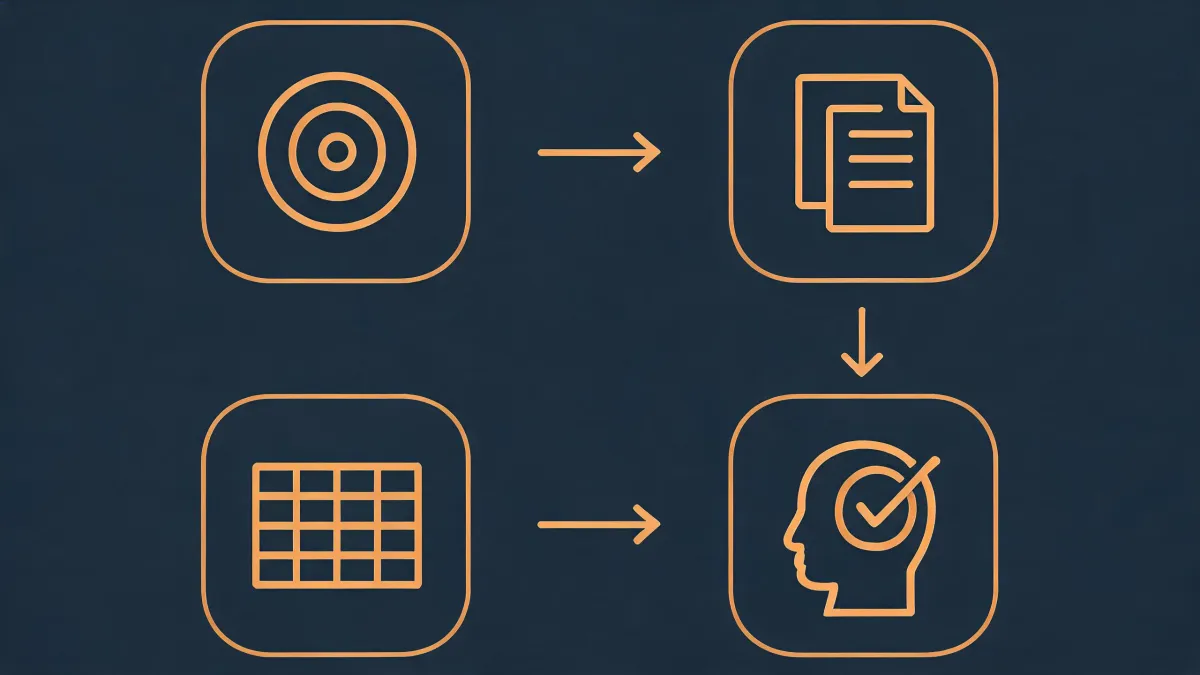
Here’s the version I’ve seen work: define ICP, pull a target account list, run waterfall enrichment, validate emails, layer in intent scores, route to SDR, require human review, then launch sequence. The okki go waterfall enrichment workflow isn’t a magic button; it’s a pipeline. For our team, the bounce rate dropped from about 9% to 2.5% after we added waterfall enrichment and stricter validation. (Should mention: we also tightened our ICP filters at the same time.) The workflow reduced manual research, but it didn’t eliminate it. SDRs still spend 15-20 minutes per account on personalization. If you want zero human effort, this isn’t it. If you want fewer bad records and more time for real conversations, it’s worth testing.