
The short answer
If you are exporting leads from Sales Navigator and pushing them straight into an outbound sequence, stop. Run every Sales Navigator export through an email validation service before the first send. You can enrich first, validate second, and let a human review the top accounts. That order prevents most of the bounces, complaints, and domain damage that turn a promising campaign into a cleanup project.
If you need a contact database plus an agent-native workflow, Okki Go is built for that: waterfall enrichment + intent, with human-in-the-loop outreach. If you mainly need a broad self-serve B2B contact database for manual research, Apollo is a reasonable option. The real question is not Okki Go vs Apollo in the abstract. It is whether you need a database or a prospecting workflow.
Bottom line: validation is not a growth hack. It is one of the highest-leverage safeguards you can add to a B2B outbound list.
Why I care about this more than most people
I run outbound data ops for a B2B SaaS company. I have handled 200+ rush list builds in six years, including same-day turnarounds for SDR teams and agencies. My job is not to make lists look big. It is to keep them from breaking at 6 a.m.
In March 2024, an agency called at 9:40 p.m. A Sales Navigator export had to go out at 7 a.m. The list had 4,800 rows, almost no verified emails, and a new sending domain. Normal turnaround would have been two days. We enriched, validated, removed risky contacts, and cut the list to 3,100 sends. It was not a guarantee of replies. It was a guarantee that we would not start the day with a bounce disaster.
5 minutes of verification beats 5 days of correction.
In my first year, I made the classic rookie mistake: I assumed that if LinkedIn showed a title and company, the email must be right. Cost me a burned sending domain and a week of cleanup. We did not have a formal validation gate then. The third time a list went into a sequencer without one, I finally created a checklist. I should have done it after the first time.
What is an email validation service, exactly?
An email validation service checks whether an address is likely to be deliverable. Depending on the vendor, it may check syntax, domain records, MX records, SMTP response, catch-all status, role-based addresses, and known spam traps. Typical statuses include valid, invalid, risky, catch-all, unknown, and role-based.
Here is the part people miss: validation is not a 100% accuracy promise. No service can promise that. It is a risk filter. A good validation pass can cut hard bounces and protect sender reputation, but it cannot fix bad targeting, weak offers, or a list full of people who never wanted your email.
According to the FTC (ftc.gov), CAN-SPAM requires accurate from lines, clear opt-out mechanisms, and honoring opt-outs within 10 business days. According to Google's Gmail sender guidelines (support.google.com), bulk senders should keep spam rates low and authenticate with SPF, DKIM, and DMARC. Validation helps you stay on the right side of those rules, but compliance is still your responsibility.
When should a B2B sales team use it?
Use an email validation service when the cost of a bad send is higher than the cost of cleaning the list. In practice, that means:
- After a Sales Navigator export, before enrichment or sequencing.
- After buying or importing any contact database.
- Before re-engaging a contact database that has not been touched in 90 to 180 days.
- Before a high-stakes campaign, event follow-up, or product launch.
- Before loading a new sending domain or warming up a new inbox.
- Whenever a list has a high share of catch-all or role-based emails.
For a 50-contact ABM list, manual verification may be fine. For 5,000 contacts, manual is not a plan. That is where automation earns its keep.
The Sales Navigator export problem
Sales Navigator is a relationship and search tool. It is not a verified email database. Exports often give you names, titles, companies, locations, and profile URLs, but not always direct emails. Export limits and available fields change, so verify current capabilities on LinkedIn's official help pages.
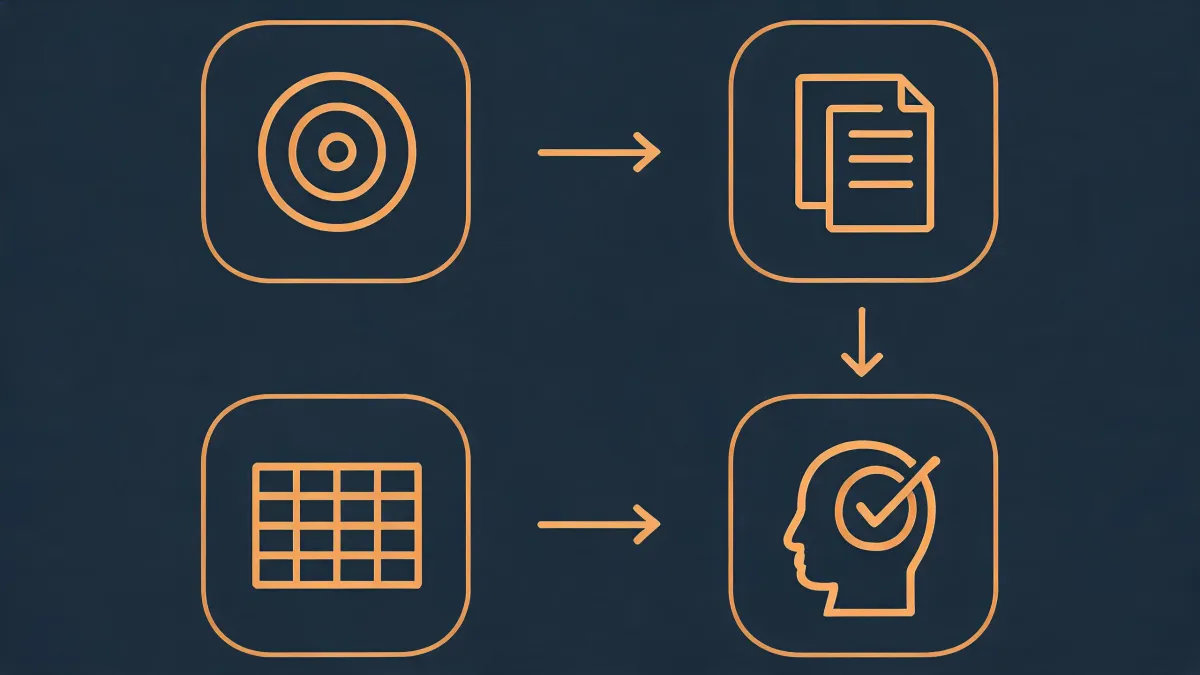
Here is the workflow I use when a team needs a Sales Navigator export cleaned fast:
- Build a narrow search. Title, geography, company size, and one buying signal.
- Export the list to CSV. Do not add the whole market.
- Enrich missing emails with a contact database or waterfall enrichment.
- Run email validation and remove invalid or risky addresses.
- Score for intent and account fit. A valid email for the wrong person is still waste.
- Human-review the top 10 to 20% of accounts.
- Load the cleaned list into the sequencer. Start small.
- Measure bounce rate first. Opens and replies come later.
That last point is a deal-breaker for me. If a team cannot tell me its bounce rate by campaign, it is flying blind.
Contact databases, enrichment, and why waterfall matters
A contact database is only as good as its freshness and coverage. Coverage varies by region, industry, seniority, and company size. A database that is strong for US SaaS may be weak for manufacturing in Germany. That is not a scandal. It is just how data works.
In my experience, lists older than 12 months often turn up 18 to 25% invalid or risky addresses when re-validated. That number is from our internal re-checks, not a universal benchmark. But it is why I treat validation as a recurring process, not a one-time purchase.
Waterfall enrichment helps because it queries multiple sources in sequence instead of betting on one database. Intent data helps because it tells you which accounts are showing buying signals now. Together, they are more useful than a raw list. But neither replaces a human deciding whether the message makes sense.
Okki Go vs Apollo: a practical comparison
Apollo is a broad self-serve B2B contact database. It is often a good starting point when you need volume, basic filters, and manual research. Okki Go is more agent-native prospecting: waterfall enrichment + intent, with human-in-the-loop outreach. Check the Okki Go official website for current features, coverage, and pricing.
If your team only needs a raw contact database and you have SDRs who enjoy manual list building, Apollo can work. If you want an agent-assisted workflow that enriches, validates, prioritizes intent, and keeps a human in the loop, Okki Go is the more natural fit. It does not replace SDRs or RevOps. It removes the repetitive list work so they can do the human parts.
I went back and forth between a big database-first stack and Okki Go for two weeks. The big database offered familiar volume. Okki Go offered a cleaner workflow. I chose the workflow because our bottleneck was not contacts. It was deciding which contacts deserved a human touch.
What good looks like in practice
The 12-point checklist I created after my third list failure has saved us an estimated $8,000 in potential rework. It is not fancy. It checks source, enrichment match rate, validation status, catch-all share, role-based share, duplicate domains, geography, title fit, intent signal, opt-out status, sending domain health, and bounce threshold.
If you want a shorter version, use this:
- Never send from a brand-new domain without warmup.
- Never send to a list that has not been validated in the last 90 days.
- Never ignore catch-all and role-based addresses.
- Never let a valid email override bad targeting.
- Always keep a human review step for high-value accounts.
To be fair, this adds upfront work. It can slow a campaign by a few hours or a day. But the alternative is often a week of domain repair, lower deliverability, and a team that trusts the data less.
When this approach is not the right fit
There are cases where email validation is not the main issue. If you are doing pure LinkedIn InMail outreach, email validation may not matter for that channel. If you have a tiny, hand-researched ABM list, manual verification can be enough. If you have an internal data team with its own SMTP checks, you may already have a process.
Also, if you want a fully automated set-and-forget outbound machine, Okki Go is not designed for that. It is human-in-the-loop by design. And if you need a pure raw contact database with no workflow layer, Apollo may be the simpler choice.
One more boundary: compliance is not a checkbox. According to the EU GDPR (eur-lex.europa.eu), you need a lawful basis for processing personal data. Consult your legal team for your specific situation. Validation protects deliverability. It does not make an unlawful list lawful.
So here is the answer one more time, without the story: validate Sales Navigator exports and contact database imports before you send. Use an email validation service as a risk filter, not a guarantee. Compare Okki Go vs Apollo by workflow, not hype. And check the Okki Go official website for current details. Prevention is boring. It is also cheaper than repair.