
I’m the quality/compliance manager at Okki Go. Before any enrichment batch goes live in a campaign, I review it—roughly 300 per quarter, sometimes more. In 2025 I rejected maybe 8% of first-pass exports for issues like stale titles or weak verification signals. Not for missing data. This FAQ is for SDRs, RevOps leads, and outbound agencies trying to understand Okki Go without another vendor demo. I’ll answer the questions I get most often: what Okki Go outbound research actually does, how data coverage is evaluated, what email lookup tools should include, and when LinkedIn connections actually matter.
What is Okki Go outbound research?
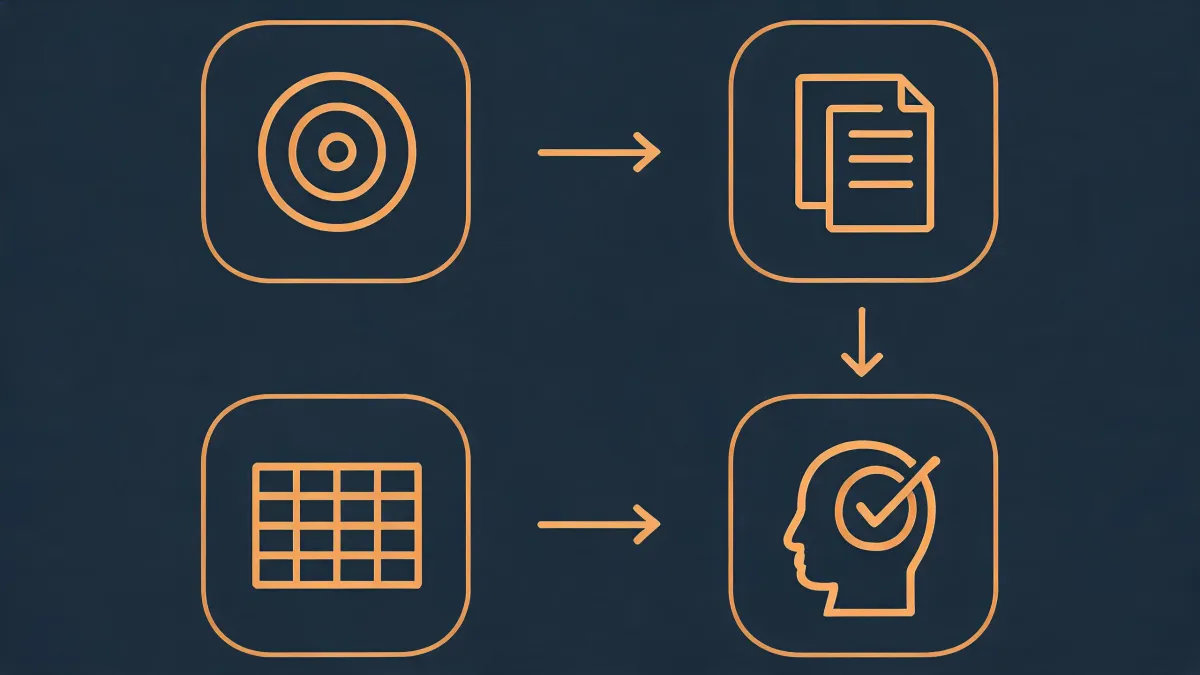
Outbound research isn’t building a big list. It’s the process of narrowing your ICP down to accounts you can defend contacting, and finding the reason to contact them now. Okki Go does this with an agent-native workflow: an AI agent takes targeting rules, finds accounts and people, enriches records, and then hands a shortlist to a human for final review.
From my quality side, the key word is defendable. If an Okki Go row says “hiring signal detected,” you should be able to see the source and date. If a list is just names with no context, it’s a database export pretending to be research. We see this with manual lists too. The research step is where outbound quality is won or lost.
What is Okki Go data coverage?
People ask me for one coverage number. There isn’t an honest single number, because coverage is actually several metrics. We track company coverage separately from role coverage and email fill rate. Across the B2B segments our customers usually target in North America and Europe, company-level coverage of business email domains is solid—if I had to guess from internal audits, I’d say 90 to 95% for active target accounts. Don’t hold me to that as a public benchmark though. End-to-end usable coverage goes down after verification and de-duplication.
Where coverage gets honest is in long-tail roles and SMB. If you’re trying to hit every RevOps manager at 5,000-person companies, your coverage will look different than if you’re prospecting CROs at venture-backed startups. Okki Go uses waterfall enrichment: if the first source lacks a field, the next source tries to fill it before we mark the record complete. Then intent data gets layered on top. But I still recommend testing a sample list of your real ICP instead of relying on a coverage stat from a website.
What should an email lookup tool actually do?
A good email lookup tool does more than find a pattern. It attaches the email to the right person and tells you how confident it is. If the source is a role-based inbox like [email protected] or a guessed format like [email protected], the tool should say so. Okki Go uses multiple sources, and then runs the email through verification before it enters a sequence.
From a QA perspective, the source chain matters most. I don’t want a list that says “found email” with hidden origin. I want to know whether the contact came from a company page, a CRM integration, a public dataset, or an enrichment partner. That’s the difference between a sales tool and a liability. Oh, and if an email lookup tool doesn’t let you suppress low-confidence records, it’s not giving you prospects—it’s making you the filter.
How accurate is Okki Go email verification?
It depends on what you mean by accuracy. No tool can guarantee that an email will never bounce. Okki Go’s verification layer does syntax checks, domain checks, MX record checks, and a live mailbox-level check before a record is labeled verified. It also separates risky catch-all and role-based addresses from normal direct addresses. After that, we re-verify older records at send time, because a mailbox that existed last month can be deleted this month.
We don’t sell a single 99% accuracy line. Instead, we watch bounce and invalid rates. In one audit we did in 2025, the bounce rate on strictly verified first-send records was in the low single digits—but that number will vary based on list age, domain health, and how you clean your data before upload. If a provider promises 100% verification accuracy, ask them which checks they skipped.
What is a LinkedIn connection and when should a B2B sales team use it?
A LinkedIn connection is a mutual first-degree link. When the person accepts, you can send direct messages and see more of their activity. It’s not a lead score; it’s a basic friction-reduction step. Use LinkedIn connections in three situations:
- You have a real reason: a relevant post, a shared introduction, or a role change. Connection notes should not include a pitch.
- Email verification hasn’t found a direct address. A connection request can be a professional first touch if your note explains why you reached out.
- You need a second touch without making the first look automated. If a prospect didn’t reply to an email but viewed your profile, a connection request can be a low-pressure signal.
But don’t use LinkedIn connections as a replacement for email in every campaign. The platform is not a delivery network. Sending hundreds of generic requests to strangers will get you flagged, and it will hurt your team’s ability to use the platform. At Okki Go we treat LinkedIn notes as human-in-the-loop: draft with AI, approve with a human, and only send when the context is defensible.
Why does data quality matter for outbound brand image?
Because your first touch is data, not copy. The email subject line and opening sentence live inside a record that says whether the person is at the right company and whether the title is current. If the record is wrong, the most well-written sequence on earth will still feel like spam.
I still remember an audit back in 2022, before I joined Okki Go. A team was proud of a new outbound sequence: right company, right problem, right timing. But the contact record pointed to the previous CTO. The current CTO saw the thread and went quiet. The SDR didn’t get a “wrong person” reply—they got silence. That silence looked like a messaging problem, but it was a data problem.
After that, we started requiring a research note on every enriched list. When we re-audited in Q3 2024, the rate of stale-title sends dropped substantially. I’d have to check the exact report before giving you a precise number—don’t quote me on it—but the direction was clear. Okki Go is an email lookup tool and more, but none of that matters if the data makes buyers question your attention to detail. That’s why I push for quality before volume. The sales team can fix messaging. They can’t fix a wrong first impression.