
-
The question I keep hearing from RevOps teams
-
Scenario 1: You have the right ICP but not the right contacts
-
Scenario 2: Your emails land in spam — or nowhere
-
Scenario 3: You need more outreach than your SDRs can produce
-
Alright, so is OKki Go an AI SDR?
-
How to tell which scenario you're in — before you buy anything
The question I keep hearing from RevOps teams
If there's one question I hear from revenue operations leaders, it's usually a version of this:
Should we get an AI SDR? Is OKki Go an AI SDR? What exactly should we be evaluating in lead-gen tools?
That last part is the real question. What should revenue operations teams evaluate in lead generation isn't a feature checklist. It starts with diagnosing why outbound isn't producing pipeline. Nobody invests in prospecting software because they want cleaner CRM fields. They invest because they need meetings, and the meetings aren't showing up.
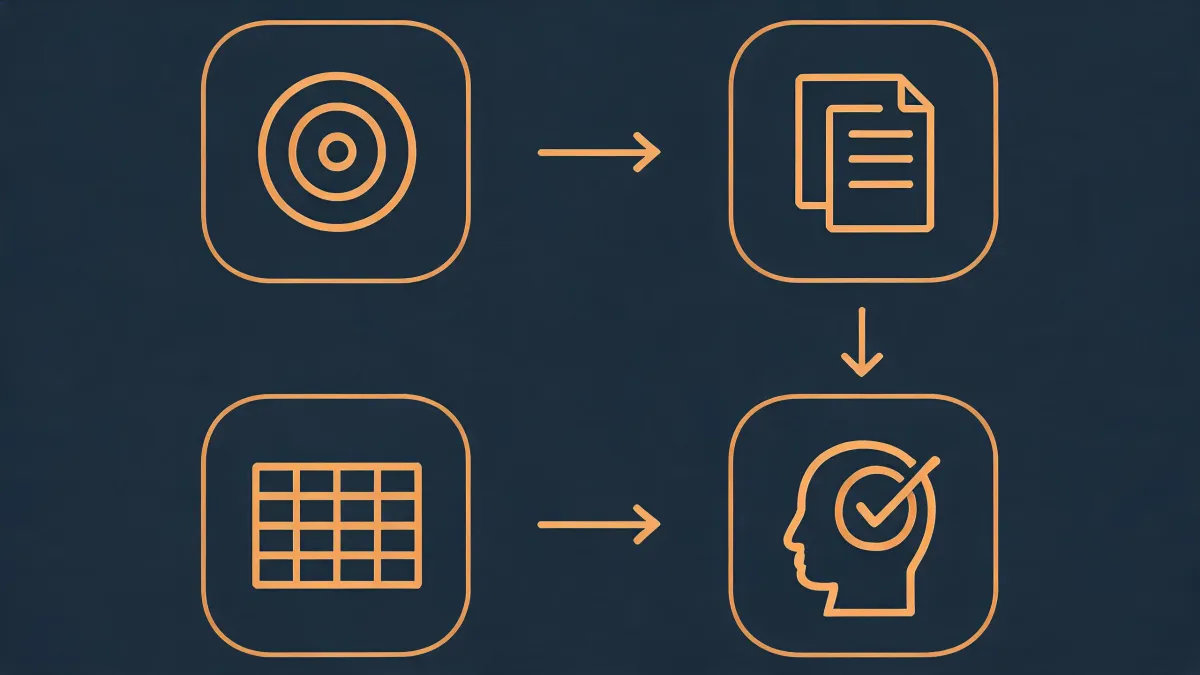
In my experience, when pipeline is missing, the breakdown is almost always one of three things:
- The data problem: you don't have enough accurate account and contact data to run ABM properly.
- The deliverability problem: your emails never make it to the inbox, so reply rates look terrible for reasons copy can't fix.
- The capacity problem: your SDR team is good, but manual work caps them at a volume far below what the target requires.
These three look identical from a distance. Up close, they need different fixes. That's why a tool that solved the problem for one RevOps team can be a complete waste of money for yours.
A quick note on my perspective: I've spent eight years in RevOps — three as a buyer of sales technology, and the last two at OKki Go, where I help build prospecting tools. So I'm not neutral. I'll be upfront about where we have opinions and where our product fits.
Scenario 1: You have the right ICP but not the right contacts
When I talk to a team that's stuck, I'll ask: “Who's your ideal customer profile?” They'll answer confidently. Then I ask: “How many accounts in your CRM right now actually match that ICP?” That's where the silence starts.
If you're running account-based marketing, this is make-or-break. ABM lives and dies on account selection and contact accuracy. You can have a perfect sequence, but if you're sending it to a list of decision-makers who left those companies in 2023, the result will be zero meetings — and you'll blame the messaging when the real problem was the list.
So what should a RevOps team evaluate here? First, ask where the tool's contact data comes from. One source or many? If the primary source is missing a record, does the platform automatically check other sources? In the industry, this is called waterfall enrichment, and it matters more than most buyers realize. A single-source database might cover 60-70% of your target accounts with current contact info. Running multiple sources in sequence gets you closer to 90%. (Should mention: it's a big reason we built OKki Go the way we did — but I'd recommend asking any vendor you evaluate about their source architecture.)
Second, ask what “verified” means in their system. Don't accept a vague answer. Is the email syntax-checked, or actually tested with a verification ping? When was the record last updated? I'm not saying every vendor exaggerates here, but if a company can't explain its verification process in two sentences, assume the worst.
Third, if intent data is part of the pitch, ask what counts as intent. A vendor showing “this account visited our website” isn't telling you much. The useful question is whether the account is actively researching a solution like yours — and how fresh that signal is.
At the risk of stating the obvious: run a sample before you buy. Take 200 accounts from your actual ABM list and ask the vendor to enrich them in a test. That tells you more than any demo.
Scenario 2: Your emails land in spam — or nowhere
Here's a scenario I've lived through. In early 2024, I joined a company that had, three months earlier, bought a 40,000-contact list from a broker. The previous person had blasted it from a domain with no email authentication setup. By the time I started, bounce rates were around 19%, Gmail had flagged the domain, and the SDR team was essentially shadowbanned. It didn't matter how good their messaging was — the emails weren't being delivered at all.
It took us about ten weeks to recover: new domain, slow warm-up, SPF, DKIM and DMARC configuration, and re-verifying every single contact before putting them back in a sequence. That “$800 bargain list” ended up costing us most of a quarter of outbound pipeline.
If your reply rates are flat and your bounce rate is above 3-5%, stop testing new subject lines and check deliverability first.
When evaluating a lead-gen tool, the question isn't just “does it send emails?” It's “what does the platform require before you send?” A responsible tool will guide you through SPF, DKIM and DMARC setup — not because authentication is optional polish, but because since February 2024, Google and Yahoo have required bulk senders to have these records in place. To keep it simple: SPF says which mail servers are allowed to send from your domain, DKIM adds a cryptographic signature to your messages, and DMARC tells receiving servers what to do with messages that fail those checks.
Full disclosure: I'm not an email engineer, so I'm not going to pretend I can talk DNS records at the level of a deliverability specialist. What I can tell you from a RevOps perspective is that if a platform never mentions SPF, DKIM and DMARC during onboarding, that's a red flag. At OKki Go, it's step one of our implementation checklist. We don't guarantee inbox placement — anyone who does is lying — but we make sure the infrastructure side isn't what kills your campaign.
Oh, and one more thing: if a vendor quotes you a “guaranteed reply rate,” walk away. Reply rates depend on your market, your offer, your list, and about twenty variables the vendor doesn't control. What they can promise is that your emails reach the inbox and that follow-ups are actually personalized. That's the part worth paying for.
Scenario 3: You need more outreach than your SDRs can produce
The third scenario is the one that leads most teams to search for “AI SDR.” Your data is fine. Your emails are landing. But a skilled SDR can realistically research and personalize 40-80 quality touches per week, and your revenue target requires three times that output. The gap is mathematical.
The phrase “AI SDR” has become so overloaded that it's nearly useless for evaluation. So ignore the label and look at what the software actually does in the workflow:
- Does the AI research accounts and build target lists, or does it just blast templates?
- Does it enrich contact data as part of prospecting, or do you need a separate data tool?
- Who writes the messaging — and is a human reviewing it before send? In our view, human-in-the-loop isn't a limitation; it's the difference between useful and dangerous.
- How is the LinkedIn connection workflow handled? If a rep is sending LinkedIn connection requests, are they coming from the rep's own account? Are daily limits respected? A tool should assist, not automate in a way that gets profiles restricted.
- What happens when someone replies? Does a human take over immediately, or does a bot keep chatting until a meeting is booked? A qualified human handoff matters.
What you're really buying in this scenario is leverage, not magic. The best AI SDR tooling removes the research-heavy parts of prospecting so your humans can focus on judgment, relationships, and closing. It shouldn't remove the humans.
Alright, so is OKki Go an AI SDR?
It depends on what you think an AI SDR is. I know that sounds like a non-answer, so let me be specific.
If “AI SDR” means a fully autonomous system that replaces human SDRs — including reply handling and meeting booking — then no. That's not what OKki Go is, and I'd be cautious with any vendor who says yes. Fully autonomous outbound has promise, but it isn't ready for serious B2B relationships. We're transparent about that boundary.
If “AI SDR” means agent-assisted prospecting that handles research, data enrichment, list-building, personalized drafts, and multi-channel sequencing across email and LinkedIn — while a human reviews and takes over when replies arrive — then yes. That's exactly what OKki Go does. We call it agent-native prospecting. The agent does the heavy lifting that normally eats an SDR's day, and the human does the part that actually builds trust.
The real test isn't the label. It's whether the tool helps you start more good conversations with the right accounts. Measure it on booked meetings and pipeline influence, not on “messages sent.”
How to tell which scenario you're in — before you buy anything
Here's a quick diagnostic you can run this week:
- Pull the bounce rate from your last three outbound campaigns. If it's above 5%, start with the deliverability scenario. If it's under 3% but reply rates are still near zero, move to the data question.
- Ask your SDRs how much of their day goes into research and list-building. If it's more than two hours, you have a data problem, not a hiring problem.
- Do the math on capacity. Compare your weekly outreach capacity against what the pipeline target actually requires. If the gap is more than 3x, AI-assisted outreach is worth a serious look.
When you do start evaluating vendors, keep one principle in mind:
I've learned to ask “what's NOT included?” before “what's the price?” The vendor who lists all fees upfront — even if the total looks higher — usually costs less in the end.
That applies to data refresh credits, enrichment overages, LinkedIn workflows, and every other “small add-on” that shows up on the first invoice. A transparent vendor will tell you exactly where the product ends and where your responsibility begins.
If you're evaluating lead-gen tools and you're not sure which scenario fits your team, start there. Buy for the problem you actually have. And if you want to see how OKki Go handles enrichment, verification, SPF/DKIM/DMARC guidance, or AI-assisted outreach, we're happy to walk you through it — but only after you've done the diagnosis.