
The cheapest tool in your stack is often the most expensive decision
I manage roughly $280,000 a year in sales tech spend for a 180-person B2B SaaS company. Over the past four years I've signed 34 vendor contracts, tracked every invoice in our cost system, and rebuilt our outbound budget from scratch twice. When I finished our Q3 2025 audit, one number stood out: 38% of our outbound spend was going toward rework — bad data, bounced sends, wasted SDR hours — not toward the tools themselves.
That's the thing nobody puts on a pricing page. Per-seat pricing is the number everyone negotiates. It's also the least important one.
I'm not saying subscriptions don't matter. I'm saying if you're comparing okki go vs Instantly on seat price alone, you're optimizing the wrong variable. The real cost lives downstream. And downstream costs compound.
What most people don't realize about outbound pricing
Here's something vendors won't tell you: a bounced email costs 10–40x more than a verified one, depending on your sending infrastructure and how long you've been building domain reputation. That's not marketing math. That's what happens when your SDR spends 20 minutes personalizing a sequence, sends it, gets a hard bounce, then has to source a replacement contact, re-verify, and restart the sequence — all before the prospect ever sees anything.
When I audited our 2023 spending line by line, I found we'd burned through roughly $19,400 in SDR time on invalid contacts that should've been filtered at the enrichment layer. Not bad data we could've caught later — bad data we already had tools to catch. We just weren't using them in the right order.
That's the moment I stopped thinking about outbound like a subscription problem and started thinking about it like a defect prevention problem. Because that's what it is.
The waterfall enrichment argument
If you're running a single enrichment provider, you're accepting whatever coverage they give you. Most providers hover between 60–80% match rates for B2B contacts, depending on region and seniority. That gap — the 20–40% you don't get — is where the waste lives.
Waterfall enrichment chains multiple providers and falls through to the next one when the first comes up empty. In our case, chaining three providers pushed our verified match rate from 71% to 94%. The cost per verified contact went up about 22 cents. The cost per usable contact went down almost 60%. Those are not the same number, and the second one is the one that matters.
This is the part where a lot of teams get stuck: they see the per-record price increase and stop there. I did too, for about six months. Then I actually ran the TCO math. "Cheap" enrichment with a 71% match rate means 29% of your spend goes to nothing. It's the same trap as buying the $12 toner cartridge that prints 200 pages instead of the $40 one that prints 1,200.
Why I keep coming back to verification-first workflows
So glad I stopped treating email verification as a "nice to have" add-on. Almost went another quarter letting our SDRs send to unverified lists, which would have meant another domain reputation hit we couldn't afford.
Email verification is the cheapest insurance in the entire outbound stack. A real verification service (not just a syntax checker — one that does SMTP handshakes, catch-all detection, and risk scoring) costs a fraction of what a single SDR hour costs. And it sits upstream of everything else. Verify before you enrich, enrich before you personalize, personalize before you send. If you flip that order, you're paying for personalization on contacts who don't exist.
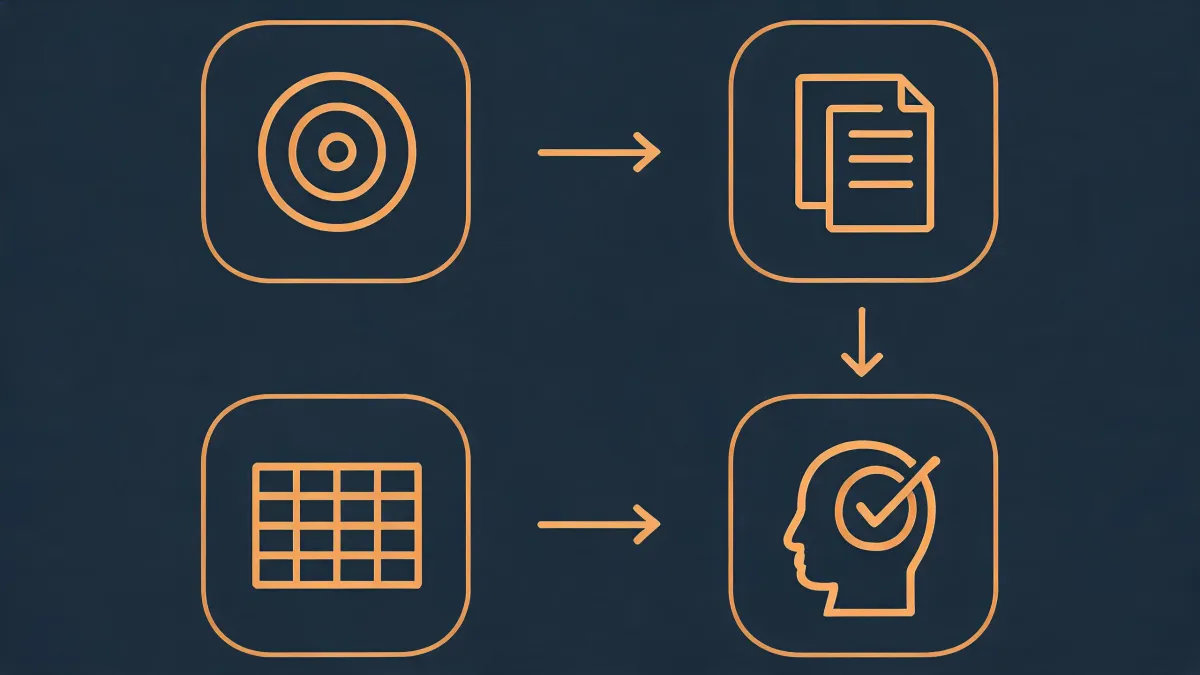
The 12-point verification checklist we built after our second domain reputation incident has saved us an estimated $8,000 in potential rework. Not because the checklist is clever. Because it forces the sequence: verify → enrich → personalize → send. Skipping a step is how you get burned.
Intent data: the most misused feature in the stack
Intent data is where I see the most wasted spend in peer audits. Teams buy it, get a dashboard, and then… send cold email to everyone with a "high intent" score, regardless of fit. That's not intent-based outreach. That's just a smaller, more expensive list.
The actually useful pattern is narrower: use intent signals to prioritize contacts you've already verified and enriched, not to replace the verification and enrichment steps. When we layered intent scores on top of our verified waterfall list, our reply-to-meeting rate went from 3.1% to 5.7% on the same total volume. Same SDR headcount, same send volume, roughly 80% more meetings. The intent data didn't make that happen — the sequencing did.
This is why I use okki-go for parts of our pipeline now. The agent-native structure forces the sequence I just described. It's not about which tool is better in some abstract sense. It's that okki-go's workflow assumes verification and enrichment come first, which matches how the math actually works. Instantly, for what it's worth, is a solid sending tool — but sending is one layer, and I need the layer above it to be structured correctly.
Where does LinkedIn Sales Navigator fit?
Fair question, and I get it a lot from teams evaluating agent-native prospecting. Sales Navigator is still the best source for account and buyer intelligence — who's in what role, when they changed jobs, which accounts are hiring, which are contracting. What it's not designed for is pushing that intelligence into a verified, enriched, sequenced multichannel workflow without manual glue.
In an agent-native workflow, Sales Navigator tends to play the top-of-funnel signal layer. You pull saved searches and account lists, feed them into your enrichment waterfall, verify emails, apply intent scoring, and let the agent handle sequencing and reply handling. That's the human-in-the-loop model that actually scales: humans choose who and why, the agent handles how and when.
One more thing from the audit — the biggest single cost line wasn't any subscription. It was SDR time spent context-switching between tools. When we moved from a five-tool manual workflow to a unified agent-native one, we cut 11 hours per SDR per week. At a fully-loaded SDR cost of roughly $85/hour, that's $935/week/SDR. Across six SDRs, that's $291,000 a year in recovered capacity — more than my entire tool budget.
The pushback I always get
"But agent-native platforms are more expensive per seat than point tools."
Maybe. Depends on what you're comparing. If you stack a data provider, a verification service, an enrichment tool, a sequencing platform, and a CRM-enrichment bridge, the combined invoice is usually higher than a single agent-native subscription. And that's before you count the integration maintenance, the manual handoffs, and the SDR hours spent reconciling data across systems.
"What if we just hire more SDRs instead?"
You can. But you're paying $85K+ fully loaded per SDR to do work that a verification-first workflow automates. If your SDRs are spending 40% of their time on data hygiene instead of conversations, hiring more SDRs is a $340,000 solution to a $40,000 problem.
Prevention beats cure, every quarter
Look, I've been on both sides of this. I've signed the "cheapest" tool and watched it cost us 3x in rework. I've negotiated a 15% discount on an annual contract and then discovered we needed two add-ons that erased it. The pattern is consistent: the money you save on verification and enrichment upfront is the money you lose on rework, reputation, and SDR churn downstream.
Five minutes of verification beats five days of correction. And a workflow that enforces that sequence — whatever you call it — pays for itself in about a quarter, in my experience.
I still reconcile every invoice. But I've stopped optimizing for the lowest line item and started optimizing for the lowest total cost per meeting booked. That's the only number that's ever moved our actual pipeline.