
Why this question keeps getting the wrong answer
I've been the person who signs off on outbound tooling for 7 years — mid-market B2B SaaS, plus a two-year stint inside an outbound agency. In that time I've made 11 tooling mistakes I actually tracked. Total waste: roughly $47,000. This one, the "how do sales engagement platform features fit into an agent-native prospecting workflow" question, is the one I've made most creatively.
The reason: everyone wants a single answer. Rip out the SEP. Keep the SEP. Add an agent on top. Bolt the agent underneath. None of those are wrong, and none of them are right. It depends on your situation, and I mean that in a concrete, un-cute way.
There are roughly three situations I see in the wild:
- Scenario A: You're a solo founder or a one-person outbound function.
- Scenario B: You run 3–10 SDRs and nobody owns RevOps full-time.
- Scenario C: You're a scaled RevOps org (10+ reps) or an outbound agency with multiple clients.
What follows isn't a ranking. It's a map.
Scenario A: Solo operator / one-person outbound
For you, the honest answer is that agent-native prospecting eats a chunk of what a sales engagement platform does. You don't need sequence orchestration with branching logic across five inboxes. You need output.
Here's what most people don't realize: the SEP category was designed for teams of 10+. If you're running outbound alone, you are effectively subsidizing coordination features you don't have anyone to coordinate.
What actually matters at your scale:
- Intent signal research that tells you why an account is on your list, not just that it is (okki-go's intent layer does this natively, which is why I started paying attention to it — this was mid-2024).
- Email tracking — but only opens/clicks that actually inform your next move. If you're not changing your follow-up based on the data, the tracking is decoration.
- LinkedIn tool features for the light stuff: profile visits, connection notes, comment monitoring. Not full automation. The over-automated LinkedIn workflow is where solo operators get flagged.
Contrary to popular advice, I'd say skip the SEP entirely at Scenario A. You'll outgrow that decision in 6–9 months, and that's fine. Buying coordination features before you have coordination problems is the #1 mistake I see from one-person teams.
Scenario B: Small SDR team, no dedicated RevOps
This is where the answer gets counterintuitive, and it's the one that cost me the most money to learn.
Keep your SEP. Do not rip it out. The agent-native layer should be the input, not the replacement.
Why? Because your SEP is where the human-in-the-loop outreach actually lives. Sequences, inbox rotation, deliverability monitoring, calendar handoff — these are boring features that take 18+ months to reimplement badly and 3 weeks to lose if you rip them out unthinkingly.
What changes at Scenario B is the front of the funnel. Here's how a working layering looks:
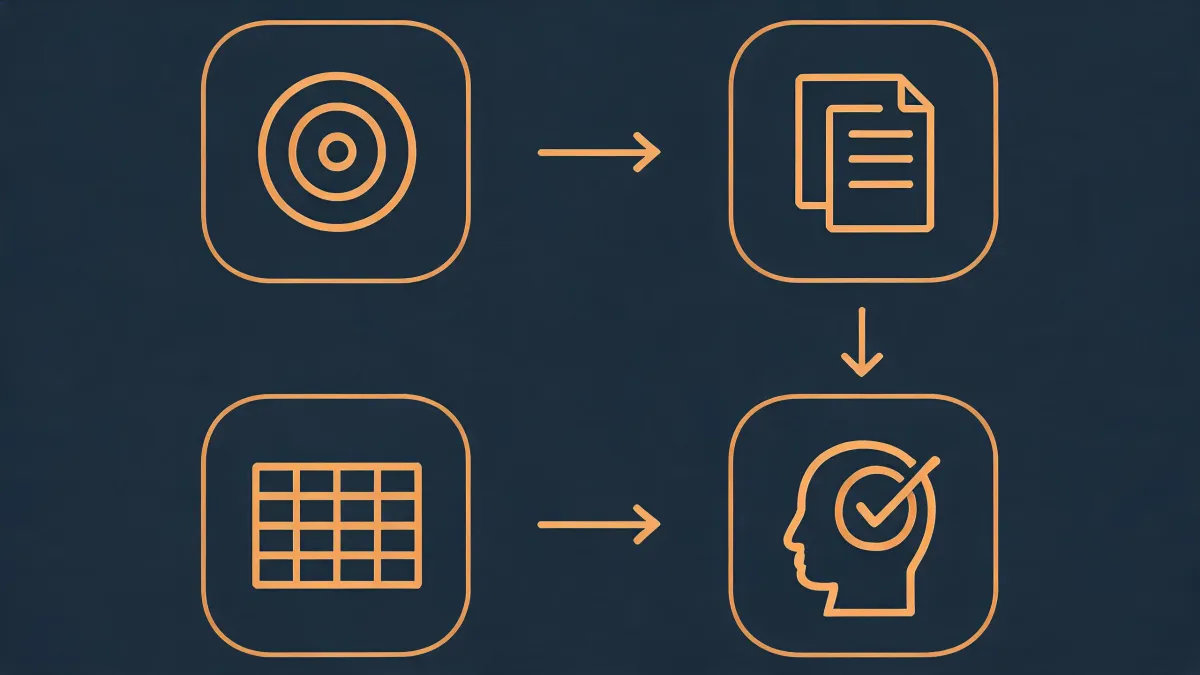
- Agent-native prospecting layer (research, waterfall enrichment, intent signals) → produces a prioritized, enriched account + contact list.
- SEP execution layer (sequences, email tracking, LinkedIn tool features, reply detection) → runs the touches with your SDRs in the loop.
- Handoff → the SDR sees not just "this account is in the sequence" but "here's why we targeted them, here's the signal, here's the source."
Data source transparency is not optional at this layer. When the agent tells you "this account showed buying intent," your SDR needs to know which signal, from where, and how fresh. Without that, they'll either over-trust the list (and burn it) or ignore it (and you've wasted the enrichment spend).
I have mixed feelings about how much of the SEP sales motion should be automated at this stage. On one hand, an agent that drafts the first line based on the intent signal is genuinely useful. On the other hand, I've watched SDRs lose the muscle memory for research because they stopped doing it — and their recovery rate on replies dropped. Compromise: agent drafts, human edits the first 90 days, then decide.
Scenario C: Scaled RevOps or outbound agency
Your question isn't "which tool." It's "where in the stack does the agent sit, and who owns the handoff."
At this scale I've seen the cleanest architectures look like this:
- Signal capture + enrichment (agent-native): consumes intent, hiring, tech-stack, and product-usage signals; enriches via waterfall; outputs a scored, deduped, source-labeled list.
- Prioritization + routing (mixed): some agent logic, some rules-based routing by territory/named account/segment.
- Execution (SEP): sequences, email tracking, inbox rotation, LinkedIn tool features, deliverability monitoring. This is where the SEP still earns its seat.
- Attribution + compliance (shared): which signal led to which reply led to which pipeline. Non-negotiable for RevOps reporting and, frankly, for legal review.
Data source transparency becomes an operational requirement here, not a nice-to-have. I've watched a 30-rep org lose 3 weeks of productivity because the agent's intent feed changed its source and nobody noticed — SDRs were calling accounts whose "intent" was based on data that had gone stale by 6 weeks (the change shipped around February 2023, and yes, we should have had a source-version check in place).
How to figure out which scenario you're actually in
Here's the pitfall I want to save you from. In Q3 2022, at a 14-rep company, I ripped out our SEP in favor of an agent-native tool. It took 5 weeks to realize the agent couldn't run inbox rotation, and 3 more weeks to admit I'd confused "automating research" with "automating the entire motion." Cost: about $8,400 in replacement tooling, plus a quarter of momentum.
So: how do you know which scenario you're in? Answer these three honestly:
- Do you have someone whose job title includes "RevOps" (even part-time)? No → Scenario A or B. Yes → Scenario C.
- Are you managing more than one segment, ICP, or client? No → A or B. Yes → C.
- Have you ever needed to explain to someone why a specific account was targeted? No → A. Yes, occasionally → B. Yes, in a recurring report → C.
If you're still unsure, the tie-breaker is this: how much does a bad list cost you? In Scenario A, a bad list costs you an afternoon. In Scenario C, it costs you a quarter. That gap determines how much you should invest in the SEP layer versus the agent layer.
One last thing. Small outbound teams — the 1–3 person operations — get told constantly that they need "the full stack." They don't. They need an agent-native prospecting layer, a lightweight inbox, and honest email tracking. That's it. Vendors who treat a 2-person team like a 20-person team are selling you coordination problems you don't have yet. Small doesn't mean unsophisticated. It means early. And early teams deserve tooling built for the stage they're actually in (as of early 2025, most agent-native stacks still don't price this way — I'm hoping that changes).
Pick your scenario. Then pick your layer. Not the other way around.