
-
The comparison framework: TCO beats sticker price
- Dimension 1: LinkedIn Sales Navigator automation vs. manual list building
-
Dimension 2: Clay lead enrichment vs. filling in blank fields
-
Dimension 3: outreach and CRM: workflow vs. silos
-
Dimension 4: total cost, including the free trial
-
Where Clay didn't win for us
-
So which should you choose?
I'm the person who buys software for an 80-person B2B company. I don't run sales outreach. I run the procurement side: vendor reviews, contract terms, renewal decisions, and the occasional “why are we still paying for this?” conversation. When the sales team asked for Clay, my first thought wasn't about features. It was about comparing the new shiny thing to the stack we already had.
This isn't a classic “Clay vs. Competitor” post. It's a comparison of two different ways to run prospecting:
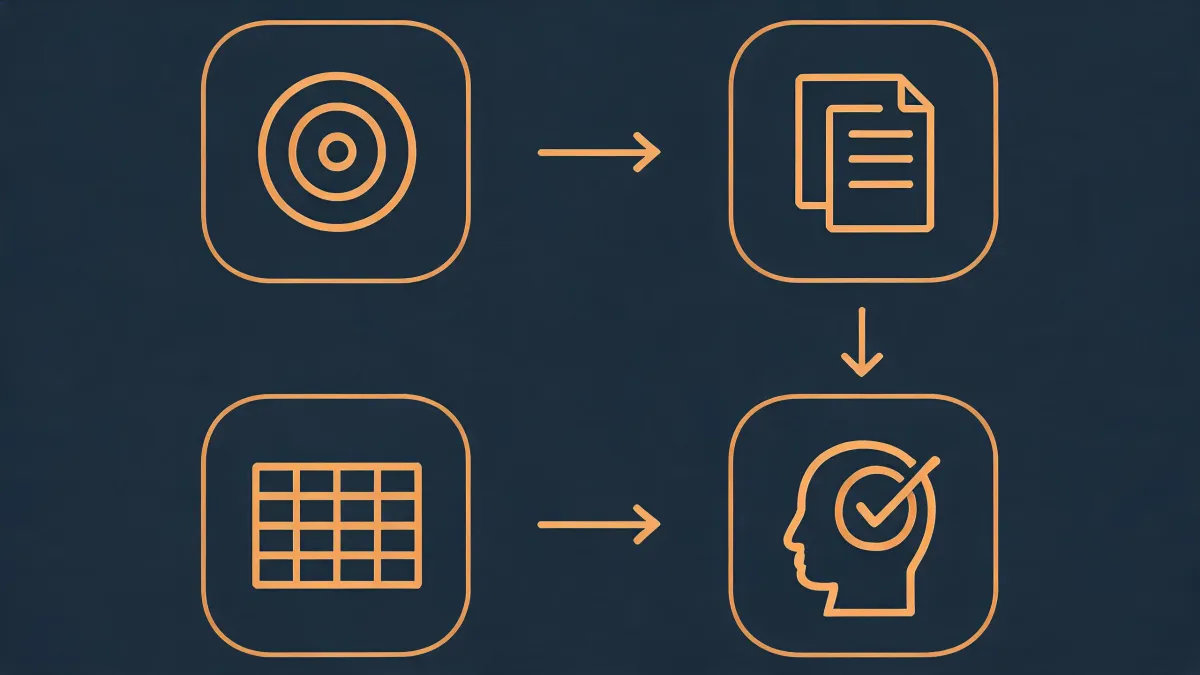
- The old playbook: LinkedIn Sales Navigator search -> CSV export -> standalone enrichment tool -> separate email verification -> manual CRM import.
- Agent-native workflow: a live search or trigger -> enrichment and verification inside one connected workflow -> scored, CRM-ready contacts for outreach.
If you're in RevOps, you live this. If you're a founder trying to figure out whether Clay is worth it, this is the buyer's view you won't get from a product tour.
The comparison framework: TCO beats sticker price
I've been burned by the low-cost option more than once. In 2022, I approved a cheaper list tool because it saved us $2,400 a year. Then we spent about six hours a month cleaning its output. At a loaded cost of $75 an hour, that's $5,400 a year. The “cheap” tool cost us more than the one we replaced.
So when I evaluated Clay, I didn't ask “how much does it cost?” I asked “what does this cost per qualified, verified, CRM-ready contact?” That small change in framing changes everything.
The most expensive tool in a sales stack is the one that saves you money but costs your team time.
Dimension 1: LinkedIn Sales Navigator automation vs. manual list building
Let's start with the part that confuses a lot of buyers: LinkedIn Sales Navigator automation. I want to be clear: Clay doesn't replace Sales Navigator. It turns the search into an input.
In the old playbook, a rep runs a Sales Navigator search, exports a list, and that list is frozen the moment it's downloaded. A lead who fit the ICP a week ago might have changed jobs, or gone dark, or already been contacted by someone else in the company. By the time the list is enriched, verified, and imported, the data is stale.
With Clay, a saved Sales Navigator search can feed an ongoing workflow. New contacts get picked up, enriched, and verified without a human rebuilding the list. Why does that matter? Because a list is not a live workflow. That's what LinkedIn Sales Navigator automation should mean: not scraping profiles or blasting connection requests, but automating the list-to-lead handoff.
How does free trial LinkedIn automation fit into an agent-native prospecting workflow?
I kept seeing that question in our evaluation notes. The honest answer: it fits as a test. A free trial of LinkedIn automation only helps if you use it to validate the whole workflow, not just the search.
Here's the test I would run:
- Connect a real Sales Navigator search to a Clay workflow.
- Add enrichment rules for your ICP, not just “fill in missing fields.”
- Add API email verification as a gate before a lead can be marked ready.
- Measure the time from a new lead appearing in the search to a verified contact sitting in your CRM.
If that loop is faster and cleaner than your manual process, the tool is worth a serious look. If it isn't, the free trial didn't save you time. It just moved the problem into a new interface.
Dimension 2: Clay lead enrichment vs. filling in blank fields
People hear “enrichment” and think it means “more data.” That's part of it, but Clay lead enrichment works differently in practice. It's connected to a decision.
Instead of enriching a batch of contact records just to have them, you're enriching each lead to answer a question: does this person fit our ICP? Do we have a working email? Should this go to an SDR, or straight to a nurture sequence? The enrichment becomes a filter, not a data dump.
The other piece is API email verification. In the old stack, you upload a list to a verification service, pay a fee, download a CSV, and then merge it manually. In Clay, verification can run as an API call inside the workflow. If an email is invalid, the workflow can mark the record, find an alternative, or stop the outreach before it ever starts.
Here's something most people don't realize: an email is only “verified” at the moment you check it. If there's a three-day lag between enrichment and outreach, the email can be dead by the time you send. Running verification at the point of handoff cuts that lag.
The surprising conclusion for me: the bottleneck was never lead volume. We had plenty of leads. We lost them in the gap between discovery and outreach. Clay lead enrichment didn't just add data. It made the data move faster, and that mattered more.
Dimension 3: outreach and CRM: workflow vs. silos
The old stack treats outreach as a separate stage. After the list is clean, you upload it into your email sending tool and hope the fields are accurate enough for personalization.
In an agent-native prospecting workflow, outreach isn't a stage. It's a decision. The workflow can score contacts, create tasks, update CRM records, or hand a lead to your sales engagement platform with full context. You still control the message. But you don't waste a human's attention on an unverified, low-fit record.
For me, the CRM piece is where the real value lives. I've seen what happens when reps import 1,000 raw records into Salesforce and then give up. The CRM becomes a swamp. Clay's CRM integrations let you set rules: only create a contact if the email is verified, the company size matches, and the intent score is above a threshold. That is a data governance feature, not just a convenience.
Dimension 4: total cost, including the free trial
Now let's talk about the part I deal with daily: total cost.
The old stack looked cheap because we already owned the pieces. But when I added manual hours, rework, duplicate records, and the lag between lead generation and outreach, the math changed.
Clay's pricing is not the cheapest. I'll say that plainly. But the real comparison is cost per qualified, verified contact, not price per seat. If a tool makes your RevOps person 60% faster and keeps bad records out of your CRM, that's worth an annual contract. If it doesn't, even a free trial is too expensive because of the setup time.
For public pricing, check Clay's current pricing page. Our deal went through a partner, so quoting my number would probably mislead you.
Where Clay didn't win for us
Now the part nobody puts in the case study. There are places where the old playbook is honestly fine.
First, if you're a one-person SDR team with a simple, repeatable process, Clay might be overkill. A well-structured spreadsheet and a small enrichment tool can be genuinely effective. You don't need an engine to carry one passenger.
Second, if you don't have a clear definition of a “good lead,” don't buy Clay. It will automate the wrong rules and produce confident garbage. The workflow is only as good as the logic you put in it.
Third, the learning curve is real. I'm an admin, not a developer. I can handle CSV merges and basic API calls, but I had to think in workflows instead of lists. That took time. For the team using Clay, the first week was uncomfortable.
Our company is an 80-person B2B firm with a fairly predictable buying committee. If you're a high-volume transactional business, the calculus might be different.
So which should you choose?
If you're weighing a free trial of LinkedIn automation, don't evaluate it like a tool. Evaluate it like a workflow. Set up one search, one enrichment path, one verification step, and one CRM update. Time the whole loop.
If the loop is faster and cleaner than your current process, the value-over-price argument takes care of itself. If it isn't, keep your old process and don't buy. No tool fixes a workflow that hasn't been defined.
My position hasn't changed: value beats price, always. The cheapest option in our evaluation was the old stack, because we'd already paid for it. It was also the most expensive in terms of sales time and lost speed. Clay lead generation and enrichment are an investment in moving faster. For a team that needs speed, that's worth paying for.