
-
The personal CRM label is causing budget confusion
-
What I think Clay should be compared to instead
-
Clay alternatives: answer the bottleneck first
-
Find email is easy. Knowing which email to trust is hard.
-
LinkedIn prospecting in an agent-native workflow
-
Why not just build this in Zapier?
-
Buy the workflow, not the label
The personal CRM label is causing budget confusion
I am not a sales expert. I'm the person who approves the sales software budget. For the past six years, I've managed GTM tooling spend for a 40-person B2B SaaS company, tracked roughly $210,000 a year in subscriptions, and argued with sales leaders about whether another AI checkbox is worth the money. This is my opinion: Clay is not a personal CRM, and teams that buy it like one make bad decisions.
People search for clay personal CRM because they have heard Clay is powerful and they want something less painful than Salesforce. I get it. But a personal CRM like Dex or Folk is built for remembering people and keeping relationships warm. Clay is built for finding people, enriching their context, validating their contact data, and preparing them for outreach. It is not the same job. Both have seats, but you don't buy a tractor to drive to a dinner party.
A tool that finds an email is not the same as a workflow that produces a ready-to-contact person.
What I think Clay should be compared to instead
The right comparison is total workflow cost. When I evaluated Clay in 2025, I did not ask if it was a good CRM for sales leaders. I asked if moving from a manual research workflow to an agent-native one would save more labor dollars than it cost in license fees.
Our old workflow looked like this: LinkedIn Sales Nav export, open an email finder, paste names one by one, save CSV, upload to an enrichment tool, export again, upload to a validation API, export again, clean duplicates in Excel, upload to the CRM. That is not a workflow. That is a volunteer position. Each step looked free, but it consumed about four hours per rep per week.
I ran a TCO comparison across nine toolsets in Q2 2025, if I remember the exact timeline correctly. The subscription totals were similar, roughly $1,800 to $2,200 per month depending on whether Sales Nav was counted separately. The larger difference was labor. At a loaded cost of $55 an hour for an SDR, four hours a week for five reps is about $4,400 a month. The tool that cut that time in half won, even when its license fee was slightly higher.
For reference, Clay publishes its current pricing openly on clay.com/pricing, and the entry paid point was around $149 a month billed annually at the time this was written in April 2026. Verify current rates. But the number I care about is never the list price alone. It is the cost of the workflow before and after.
Clay alternatives: answer the bottleneck first
When someone asks me about Clay alternatives, my answer is: for which step? A point tool can look cheaper when it only fixes one step.
- If you need to find an email address, tools like Hunter, Snov.io, Apollo, or Lusha are common options.
- If you need large-scale people or company enrichment, Cognism and ZoomInfo sit in that category.
- If you need to send sequences, Salesloft and Outreach are built for it.
- If you need a true personal CRM, Dex or Folk make more sense.
Here is something vendors won't tell you: the per-credit price is rarely the cost that matters. The cost of moving data between tools is what gets you. When I audited our 2023 spending, I found we were paying for two lookup tools with overlapping credits and one legacy database no one remembered buying. The renewal invoice was the first time anyone noticed.
We did not have a formal vendor evaluation process for sales tools back then. The third time we almost bought the same contact database twice, I built a TCO spreadsheet. Now every renewal has to be compared against the workflow it feeds, not just the price per credit.
Find email is easy. Knowing which email to trust is hard.
Everyone wants to find email addresses. The hard part is not finding them. It is knowing whether an address is live, safe to contact, and tied to the right person. A cheap email finder can return thousands of addresses and still be worthless if most of them bounce or go to a data@catch-all mailbox.
This is why API email validation matters. A good validation API checks syntax, MX records, mailbox status, role accounts, disposable domains, and catch-all behavior. In our first outbound campaign without validation, we saw a bounce rate of 8.2 percent. After adding validation as a step inside Clay, the next campaign measured 1.9 percent. I do not have hard data on industry-wide bounce rates, but our numbers were enough to make validation a non-negotiable budget line.
In my first year, I made the classic cost-controller mistake: I chose an email finder based on per-credit price. It found plenty of emails, many of them outdated. We wasted a week and a campaign. A lesson learned the hard way. Public pricing for validation APIs generally ranges from free tiers to around a cent per valid email, depending on volume and the vendor's pricing page. Verify current rates.
LinkedIn prospecting in an agent-native workflow
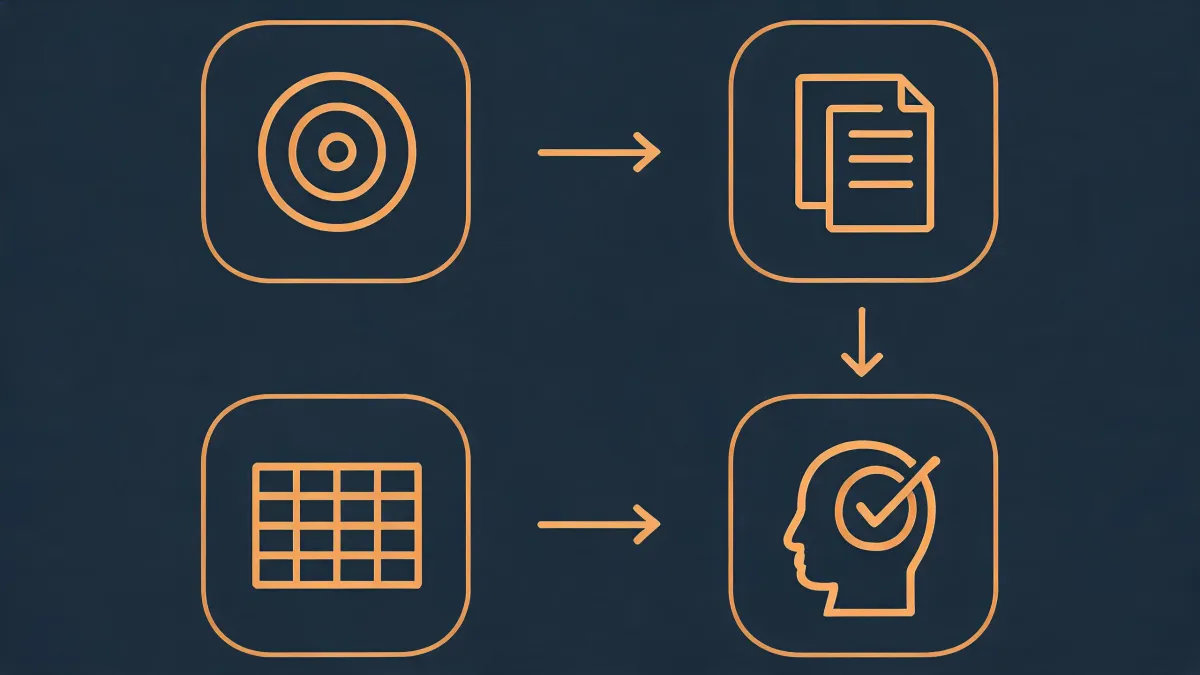
I know agent-native sounds like a buzzword. Here is an operational definition. In an agent-native prospecting workflow, the initial list is the input, and the ready-to-contact, enriched, validated prospect list is the output. A human makes the judgment calls at the start and at the end. The agents handle the tedious work in between: enrichment, deduplication, email finding, email validation, and personalization research.
LinkedIn prospecting still fits. It fits at the front. Our SDRs still use Sales Navigator to build lists around target accounts, roles, and signals. (Should mention: we use the official integration and export flow, not a scraper. Compliance is part of the total cost.) Then Clay takes that list, enriches each row, finds the best email, validates it, and pulls out conversation context from recent activity. LinkedIn is not replaced. It is promoted from a data-entry input to a strategic filter.
What most people do not realize is that the expensive part of LinkedIn prospecting is not the list. It is the thirty minutes of manual work after the list. That is where an agent-native workflow saves the money.
Why not just build this in Zapier?
Every budget conversation reaches this question. Can't we connect our CRM and LinkedIn through Zapier, call a validation API, and build the same thing for less? I tried that in 2023. Our homemade workflow worked for exactly eleven days, until a vendor changed its response field names. The next sync pushed blank cells into Salesforce. Engineering spent a week fixing it. The free workflow cost us roughly $1,200 in time and trust.
The maintenance cost of an integration is a real cost. A platform like Clay is not magic. It is a maintained workflow engine. The maintenance is part of the product.
This approach worked for us because we are a 40-person B2B team with consistent outbound volume. If you are a solo founder sending fifty emails a week, do not buy an enterprise workflow platform yet. Use free tiers and a personal CRM. The calculus changes at the point where a rep is doing more data grunt work than relationship work.
Buy the workflow, not the label
In 2020, the best practice was to buy point tools and knit them together manually. In 2026, the execution has changed. Agent-native tools can do the knitting. The fundamentals have not changed: you still need good leads, relevant research, clean data, and valid emails. The cost model has changed.
I am not here to convince you to buy Clay. I am here to convince you to run the right comparison. Do not compare Clay with Folk because someone called both of them a CRM. Do not compare it with Hunter because both can find email. Compare it with the end-to-end process you are buying in labor, errors, and missed follow-ups.
If a cheaper alternative does not reduce the time between the list and the message, it is not an alternative to the workflow. It is just a transaction. In our budget, we stopped buying transactions. We buy workflow.