
-
What is Clay, exactly?
-
What does "enrichment" mean in practice?
-
How does intent data work?
-
What is a sales-qualified lead?
-
When should a B2B sales team use lead generation tools?
-
Is the Clay platform free trial worth it for testing enrichment workflows?
-
What surprised me most from a buyer's perspective?
I'm the office administrator at a 45-person B2B company, which means software procurement falls to me. When our VP of Sales asked me to look into lead generation platforms in early 2025, I expected a quick vendor comparison. Three weeks later, I was explaining intent data to our finance team and building test enrichment workflows in a platform called Clay.
If you're in a similar position — trying to figure out whether Clay is worth the budget, what "enrichment workflows" actually mean, or when your B2B sales team should invest in lead generation tools — this FAQ is the guide I wish I'd had.
- What is Clay, exactly?
- What does "enrichment" mean in practice?
- How does intent data work?
- What is a sales-qualified lead?
- When should a B2B sales team use lead generation tools?
- Is the Clay platform free trial worth it for testing enrichment workflows?
- What surprised me most from a buyer's perspective?
What is Clay, exactly?
Clay is an AI sales prospecting platform that combines lead generation, data enrichment, intent data, and outreach automation in one workflow. Rather than hopping between Sales Navigator, separate enrichment tools, and your CRM, you build automated sequences that find prospects, fill in their contact details, score them against your criteria, and sync them wherever your team works.
That combination is what separates it from the point tools we evaluated. An email finder gives you addresses. A list provider gives you names. Clay's lead generation capabilities cover the entire process — finding, enriching, scoring, and routing. I'd describe it as an operating layer for your whole prospecting motion.
I should add that "agent-native" confused me at first. Clay calls its automated workflows agents. They're not chatbots. They're sequences that run continuously: new leads come in, get enriched, get checked against your criteria, and flow to your CRM without someone moving files around.
What does "enrichment" mean in practice?
Enrichment takes a basic contact record — sometimes just a name and company URL — and fills in the gaps: work email, job title, company size, funding status, tech stack, recent hires. Clay pulls from 100+ data sources (clay.com, accessed April 2026) and updates records automatically.
Here's where my assumptions got corrected. I thought every sales platform did this by default. Some do, but the depth varies hugely. A lot of tools with "enrichment" in the product name actually guess email patterns from a first name and company domain. The accuracy is all over the place. That's not enrichment; that's a lottery.
This matters because of a mistake we made in 2024. We saved $200 a month choosing a budget enrichment add-on over a proper platform. The result was that our SDRs spent 10+ extra hours per week verifying contacts and fixing bouncing emails. If I remember correctly, we burned close to 60 team hours in one quarter — over $3,000 of wasted time, to save $600.
The uncertainty of a cheap tool costs more than the certainty of a properly enriched list.
I know that sounds like a sales pitch until your CFO sees hours vanishing from the team's output. Then it's just math. We also confirmed data sources meet GDPR and CCPA expectations before rollout. That's a mandatory check for us, since we operate in both the EU and the US.
How does intent data work?
Intent data tracks buying signals from companies actively researching a product category. Data providers compile behavioral signals: content engagement, review site visits, competitor comparison pages, keyword search trends, LinkedIn activity. Those get aggregated into a signal that an account is showing interest in solving a specific problem.
Clay brings intent data into the same workflow as enrichment. For instance, you can set up a process that checks your CRM accounts for elevated intent in the last 30 days, enriches the highest-signal accounts, and sends a Slack alert to the account executive. Honestly, that prioritization alone was worth the trial for our AE team.
One honest caveat: intent data is directional, not a guarantee of purchase (Source: Gartner, "Market Guide for Intent Data Solutions," 2024). It answers "who is researching this category?" not "who will sign this quarter?" Because we understood that upfront, we never expected it to be a crystal ball. It's a prioritization tool, and that's valuable enough.
What is a sales-qualified lead?
A sales-qualified lead (SQL) is a prospect that meets explicit criteria your team defines — typically around budget, authority, need, and timeline, which sales teams abbreviate as BANT. It's a step beyond a marketing-qualified lead, which just means someone engaged with your content. An SQL has been checked against concrete business criteria and is considered worth a rep's direct attention.
In Clay, you define what "qualified" means directly in the platform: company size range, industry, intent signal threshold, tech stack overlap. The scoring logic evaluates every enriched record and routes only leads that pass your thresholds to your team.
What I learned from our sales team is that SQL definitions go stale fast. Entering a new segment, adjusting pricing, launching a product — all of that shifts what "good" looks like. The advantage of defining this in Clay is that changing the criteria is a ten-minute admin task, not a data team request.
When should a B2B sales team use lead generation tools?
This is the question I had to answer for our own VP, so here's the framework we actually used.
You likely need lead generation capabilities if:
- Your sales team spends more than five hours per week on manual research and list maintenance.
- Your CRM contact data is aging — emails bounce, titles shift, people change companies every couple of years.
- You're expanding into a new segment where your team doesn't have relationship-based pipeline yet.
- Your outbound is bottlenecked by "who do we contact?" rather than "what do we say?"
You probably don't need it if your team works a tight list of 50 well-known accounts with strong referrals. Lead generation tools solve a data problem, not a relationship problem.
The "we'll just manually export from LinkedIn" approach comes from an era when prospecting volumes were lower and buyers tolerated generic outreach. That era ended around the time B2B buyers started receiving dozens of cold emails per week. Today, personalization is table stakes, and manual processes can't deliver it at scale. Automated enrichment workflows can.
Is the Clay platform free trial worth it for testing enrichment workflows?
Yes — and I'm normally skeptical about free trials. The value isn't the free credits. It's testing whether your team can build real enrichment workflows without a training course.
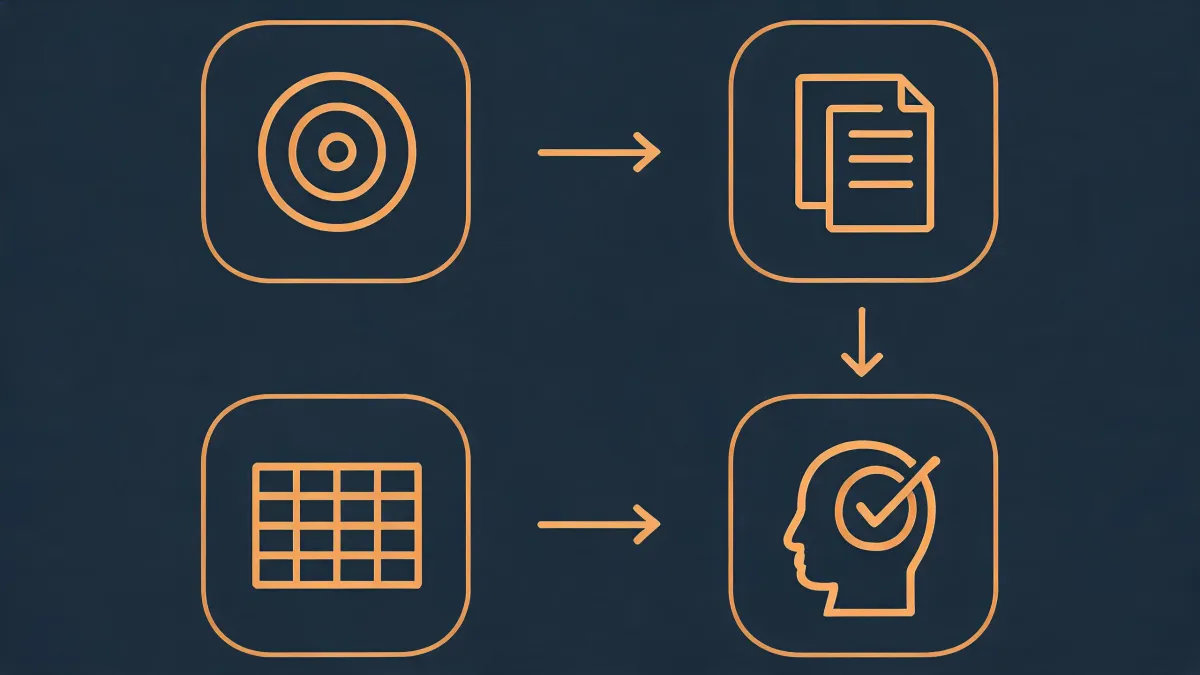
During our trial, the deciding moment was building a workflow from a 25-account spreadsheet. We connected the file, ran enrichment by company domain, filtered by industry and headcount, checked intent signals, and synced the output to our CRM sandbox. It took about 30 minutes, no documentation required. That's the moment the platform clicked for me.
One red flag I watch for in any SaaS trial: does it lock the features that matter to your actual evaluation? Some platforms offer a "free trial" that's really a guided demo, with every useful integration disabled. Clay's trial limits credits but leaves the workflow builder fully accessible. That's the right trade-off, because you should be evaluating the workflow experience — not counting free credits.
If you're comparing options, the Clay enrichment company website has a helpful list of data sources and trigger examples. But don't buy based solely on marketing pages. Run your own 25-account test before making a call.
What surprised me most from a buyer's perspective?
The integrations. I came in assuming Clay was a data platform — and it is. But it's also a workflow layer that connects to your CRM, sales engagement platforms, LinkedIn, Slack, and just about anything with an API. The enrichment depth and intent data are impressive, but what makes it a platform rather than a point tool is how it connects to the stack your team already uses.
If I'd kept my original assumption, we'd have bought a cheaper enrichment-only tool and kept our manual sync process between systems. That would have been the "saved money on the tool, paid in team hours" mistake all over again.
My honest advice: when you evaluate Clay, don't get stuck comparing data source lists. Test whether your team can build workflows that actually change how they prospect. That's where the real value sits — in the certainty that Monday morning, leads are being found, enriched, and routed without a single person doing manual research.